







Avani buddies, when you’re done cooking and look at the pile of vegetable scraps on the counter. Did you ever wonder can I compost this without a backyard or making the whole apartment smell? Yes. That is where the Takakura composting method becomes useful.
Takakura is a compact aerobic composting system that uses a breathable container and a microorganism rich fermentation bed to break down suitable household organic waste. This composting method is very suited for apartments, balconies, and small homes area where a traditional compost pile is not practical.
If you are completely new to composting, start with our complete guide to composting at home to understand greens, browns, moisture, airflow, and the basic composting process.
What Makes Takakura Composting Different?
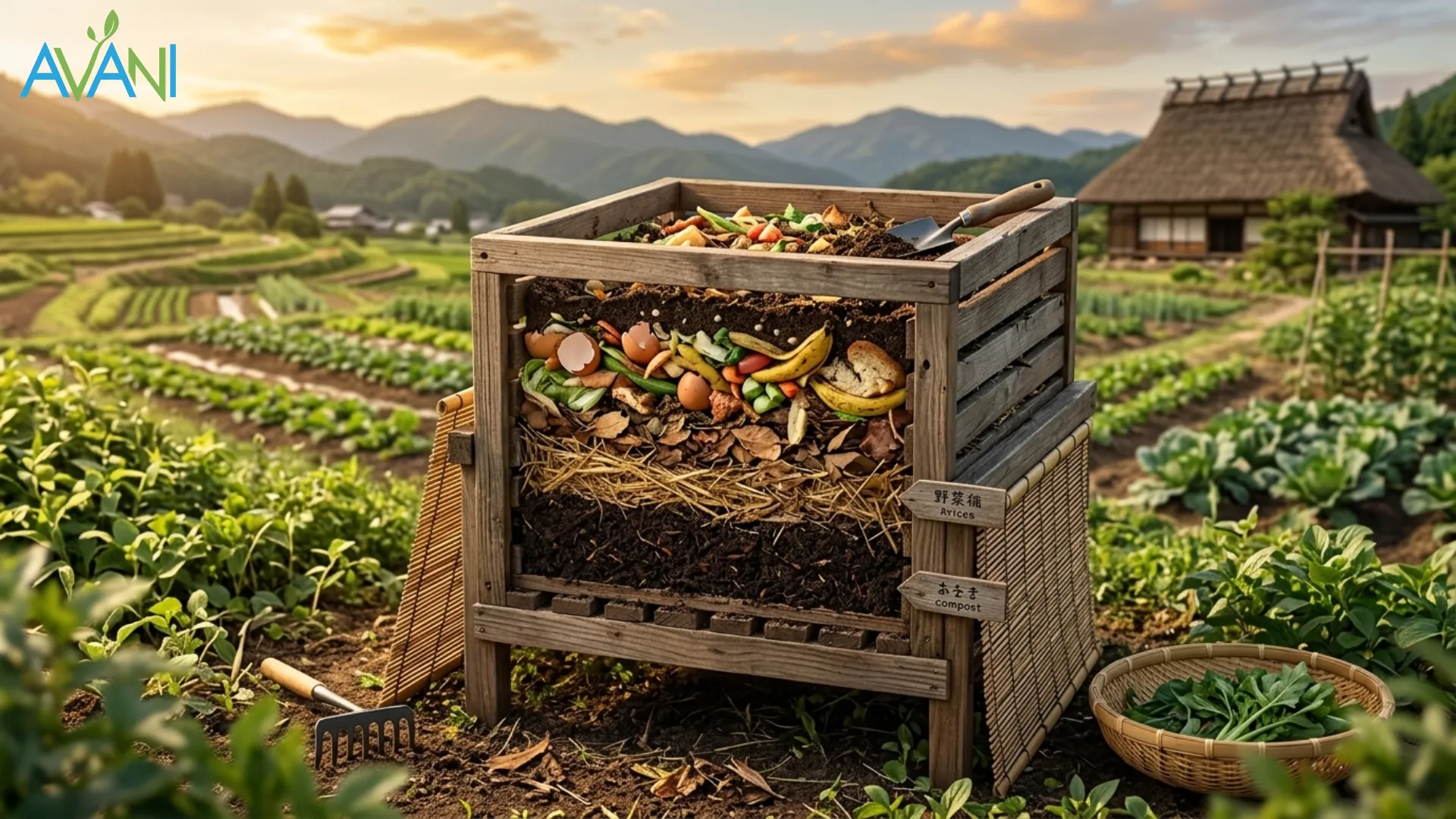
Avani buddies, unlike other composting methods that need a large outdoor pile, the Takakura method only need a small basket.
The method starts by cultivating naturally occurring microorganisms. These will be placed in a fermentation bed made from rice bran and rice husks. Once activated, that bed becomes the environment where food scraps from the kitchen break down.
When the balance is right, the material feels moist and loose and smells mildly earthy or fermented, not rotten.
What Do I Need to Start?
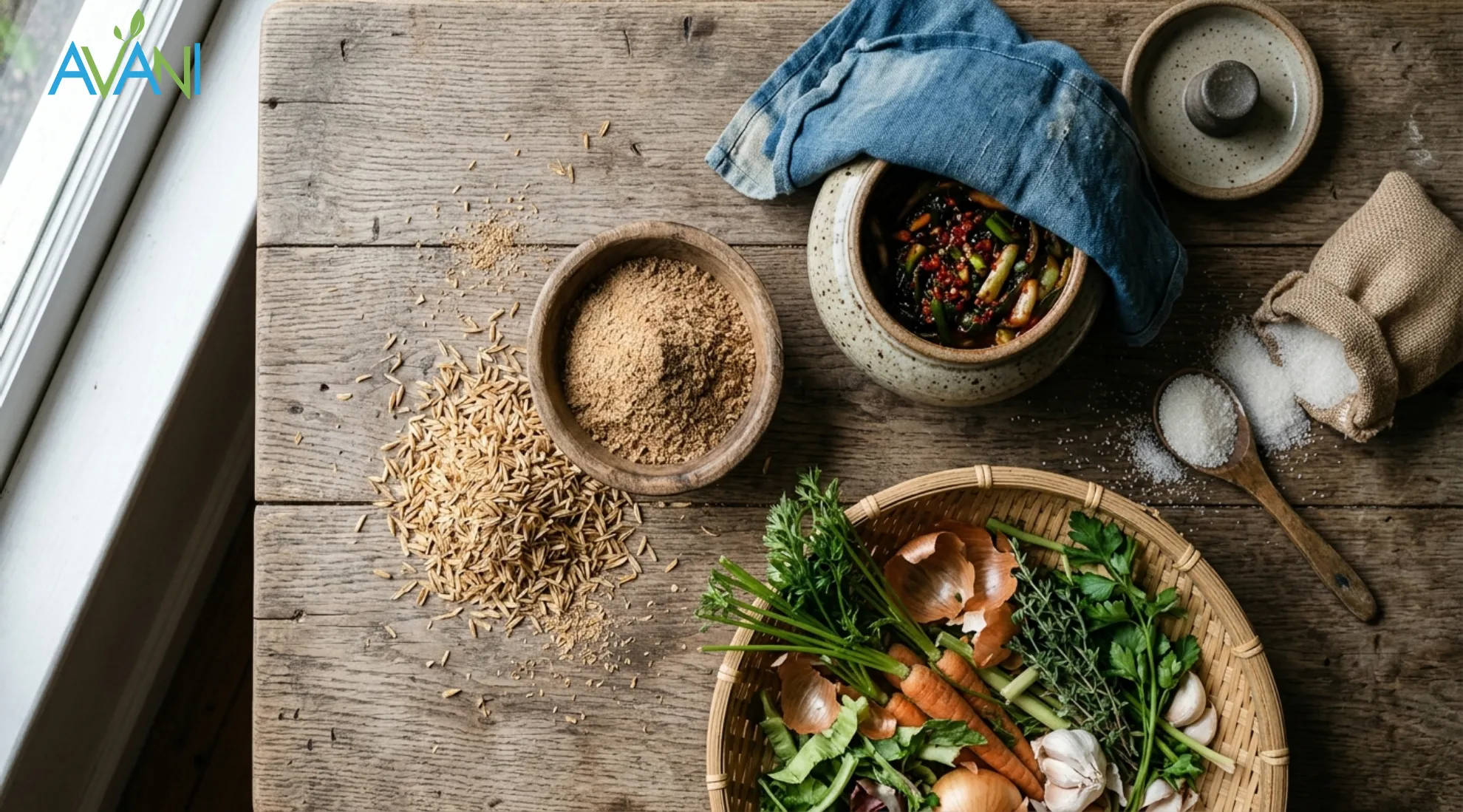
Avani buddies, before you start using the Takakura composting method, there are few things you need to prepare:
- A breathable basket, earthenware pot, or sturdy cardboard box.
- Rice bran.
- Rice husks.
- Fermented food such as yogurt or tempe.
- Sugar and water.
- Breathable cloth, newspaper, or jute.
- Suitable organic kitchen scraps.
- A container for preparing the starter liquid.
For the fermentation bed, use rice bran and rice husks at a 1:1 ratio. Aim for moisture of roughly 40–60%.
Step 1: Make the Fermenting Liquid
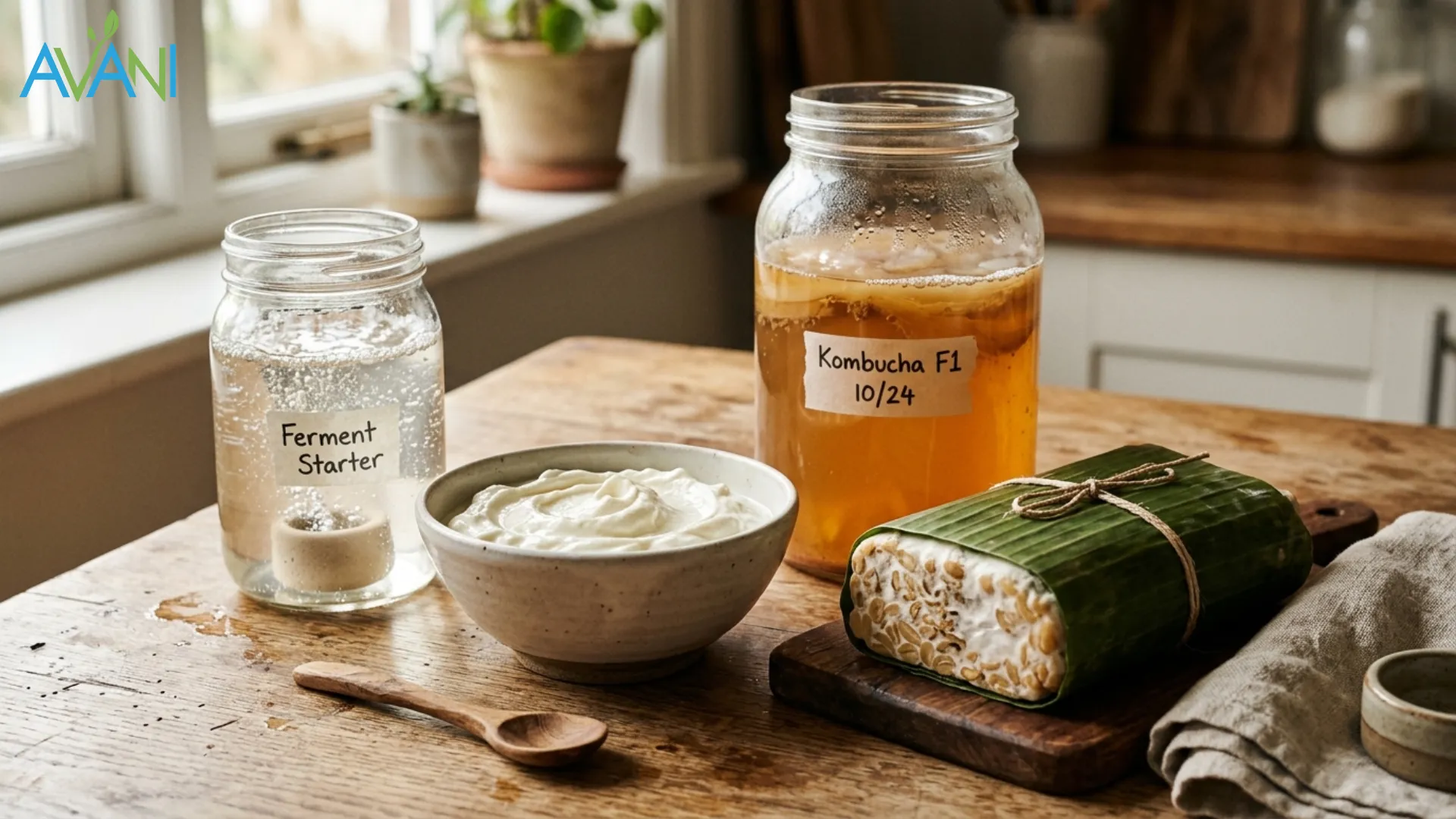
Avani buddies, the first step is to mix a small amount of fermented food with sweetened water. The sugar contained in the water will be used as energy by microorganisms as they multiply.
After that, close the container but don’t seal it tightly, and leave it for around 3–5 days. Then, use your nose as a simple check.
A successful starter should smell sweet and sour or mildly fermented. On the contrary, a strong rotten smell usually means that you’ve failed, it is better to restart.
Step 2: Fermentation Bed Preparation
Mix rice bran and rice husks at a 1:1 ratio, then gradually add the fermenting liquid. Take a handful and squeeze it.
The mixture should form a loose lump without dripping water. If it falls apart immediately, it is too dry. If water runs out, it is too wet.
Cover the mixture with breathable material and leave it to develop. Pale or whitish microbial growth may appear after roughly 3 days to 1 week.
Step 3: Set Up the Compost Basket
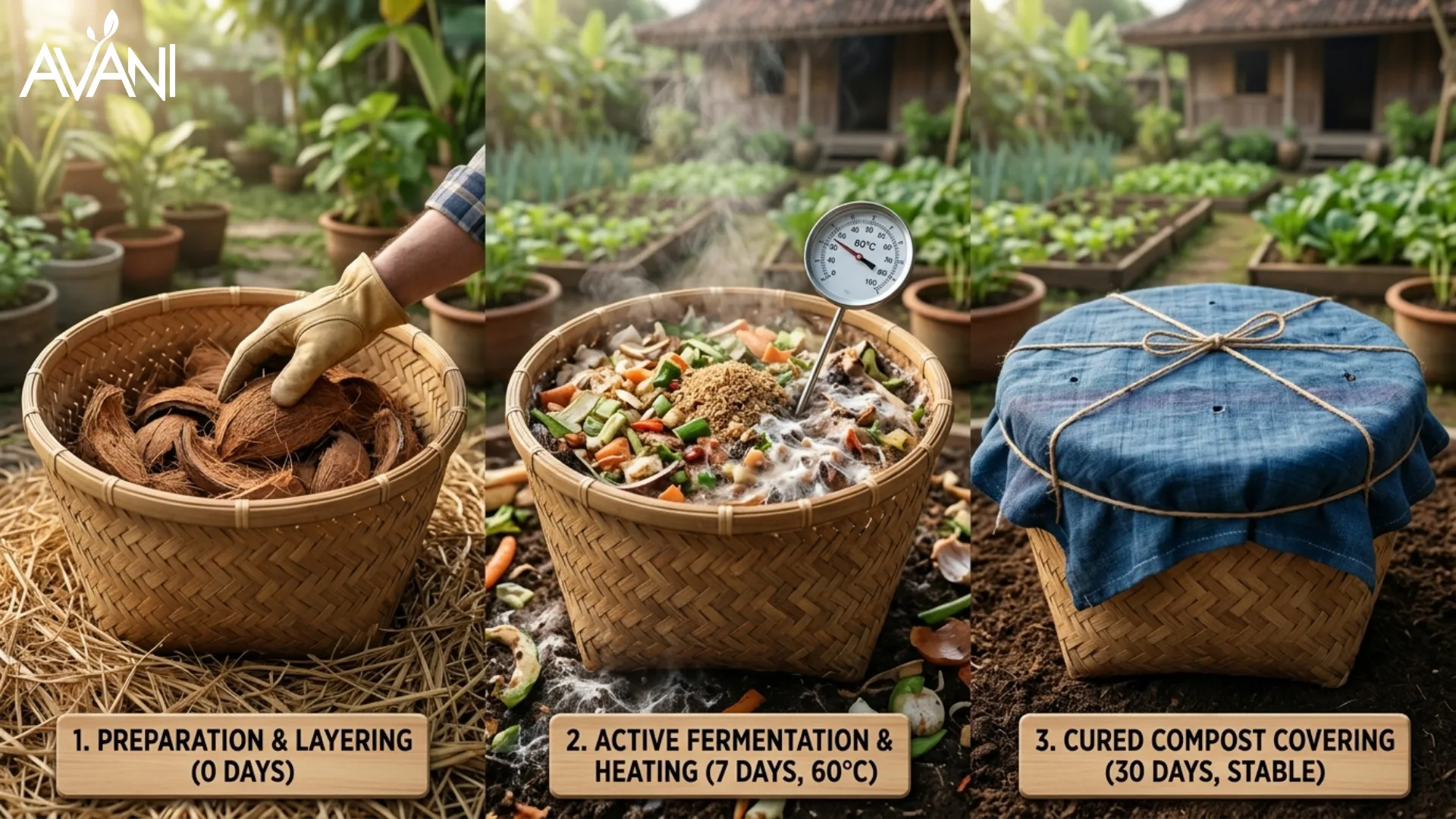
Fill the container to around 60% capacity with the active fermentation bed.
Then:
- Keep the bed loose rather than tightly packed.
- Cover the surface with newspaper.
- Add a breathable fabric or jute cover.
- Place the basket somewhere protected from heavy rain.
- Keep air circulating around it.
Do not use an airtight lid. Takakura is an aerobic process, so oxygen is essential.
Step 4: Add Food Scraps from the Kitchen
Avani buddies, the final step is to cut remaining food scraps into small pieces before adding them. Smaller pieces decompose more easily because microorganisms can reach more surface area.
Drain very wet scraps first, then mix them thoroughly into the fermentation bed instead of leaving them exposed on top.
Stir the basket once a day when food waste is being added. Regular mixing keeps oxygen moving through the material and helps prevent wet, anaerobic pockets.
How to Keep Takakura Compost Healthy
Avani buddies, there are three things that matter most: air, moisture, and consistency.
If It Smells Rotten
The mixture is probably too wet or not getting enough oxygen. Mix it thoroughly and temporarily reduce wet scraps.
If It Feels Too Wet
Drain kitchen scraps before adding them and increase airflow. The mixture should feel damp, not soggy.
If Flies Appear
Do not leave fresh scraps on the surface. Bury and mix them into the active bed, then keep the basket covered with breathable material.
If Decomposition Seems Slow
Chop scraps into smaller pieces, check moisture, and make sure you are mixing regularly.
How Long Does Takakura Composting Take?
Avani buddies, Takakura is usually managed as a continuously fed system rather than a single closed batch.
A practical timeline is:
- Starter liquid: 3–5 days
- Fermentation bed activation: 3 days to 1 week
- Basket filling under normal household use: around 3 months
- Maturation after removal: around 2 additional weeks
When the basket becomes full, remove only part of the compost. Leave some active material behind so it can continue working as the fermentation bed for the next cycle.
Is Takakura Composting Method Right for Your Home?
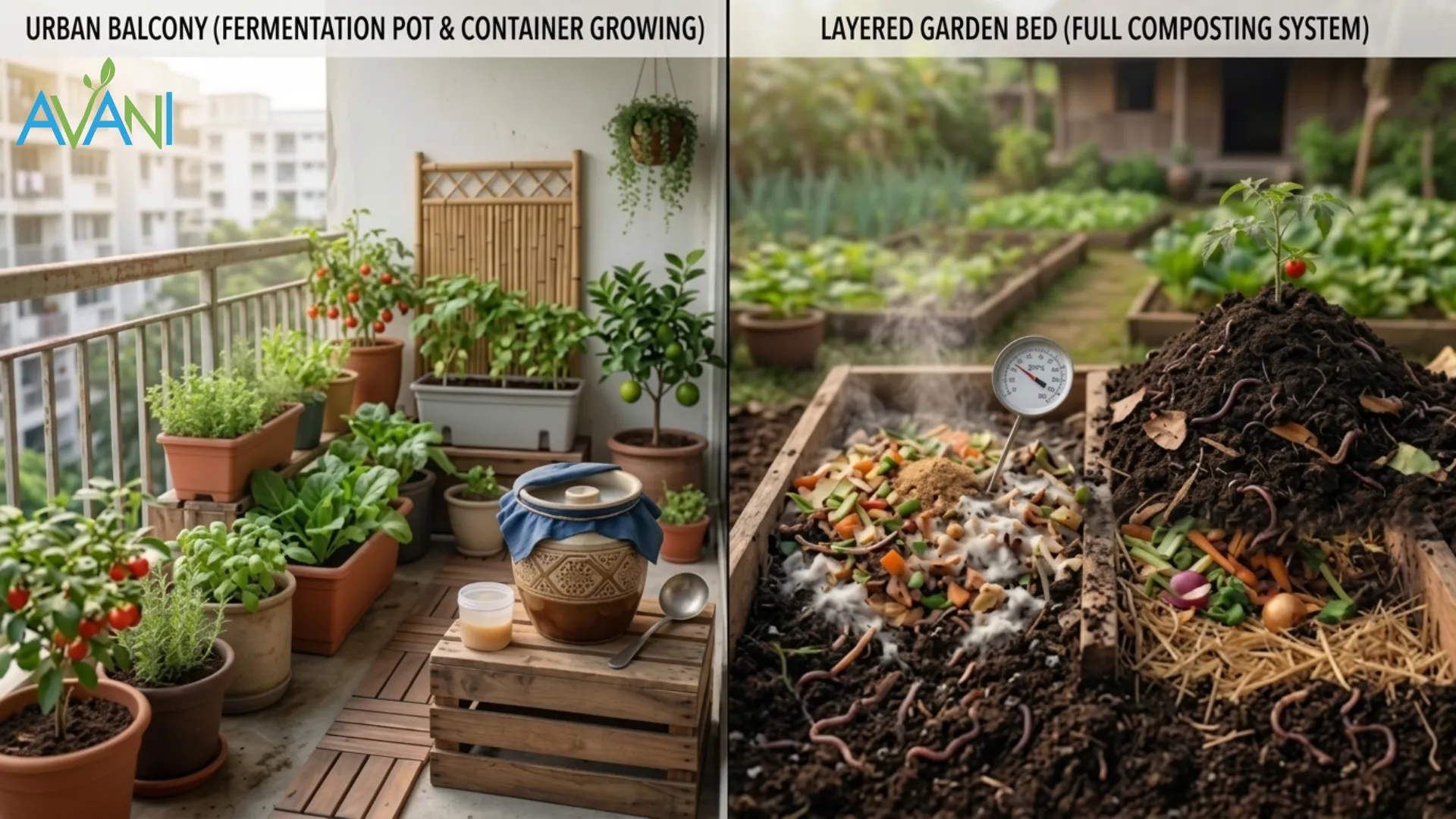
Avani buddies, Takakura is a good fit if you:
- Live in an apartment or small house
- Mainly produce kitchen scraps
- Have limited outdoor space
- Can mix the compost regularly
If you have a garden, plenty of dry leaves or cardboard, and prefer a slower layered method, the Lasagna composting method for garden beds may be more suitable.
Frequently Asked Questions About Takakura Composting Method
Does Takakura Compost Smell Bad?
Healthy Takakura compost should smell earthy or mildly fermented. Strong rotten odors usually indicate excess moisture, poor airflow, or exposed food scraps.
How Often Should I Mix Takakura Compost?
Mix it once a day when food waste is being added. This keeps the material aerated and supports aerobic decomposition.
Can I Use Takakura Composting in an Apartment?
Yes. Its compact, breathable-container setup makes it suitable for small spaces, provided the basket is kept ventilated, sheltered from heavy rain, and properly managed.
Start Takakura Composting Method With One Basket and Learn as You Go
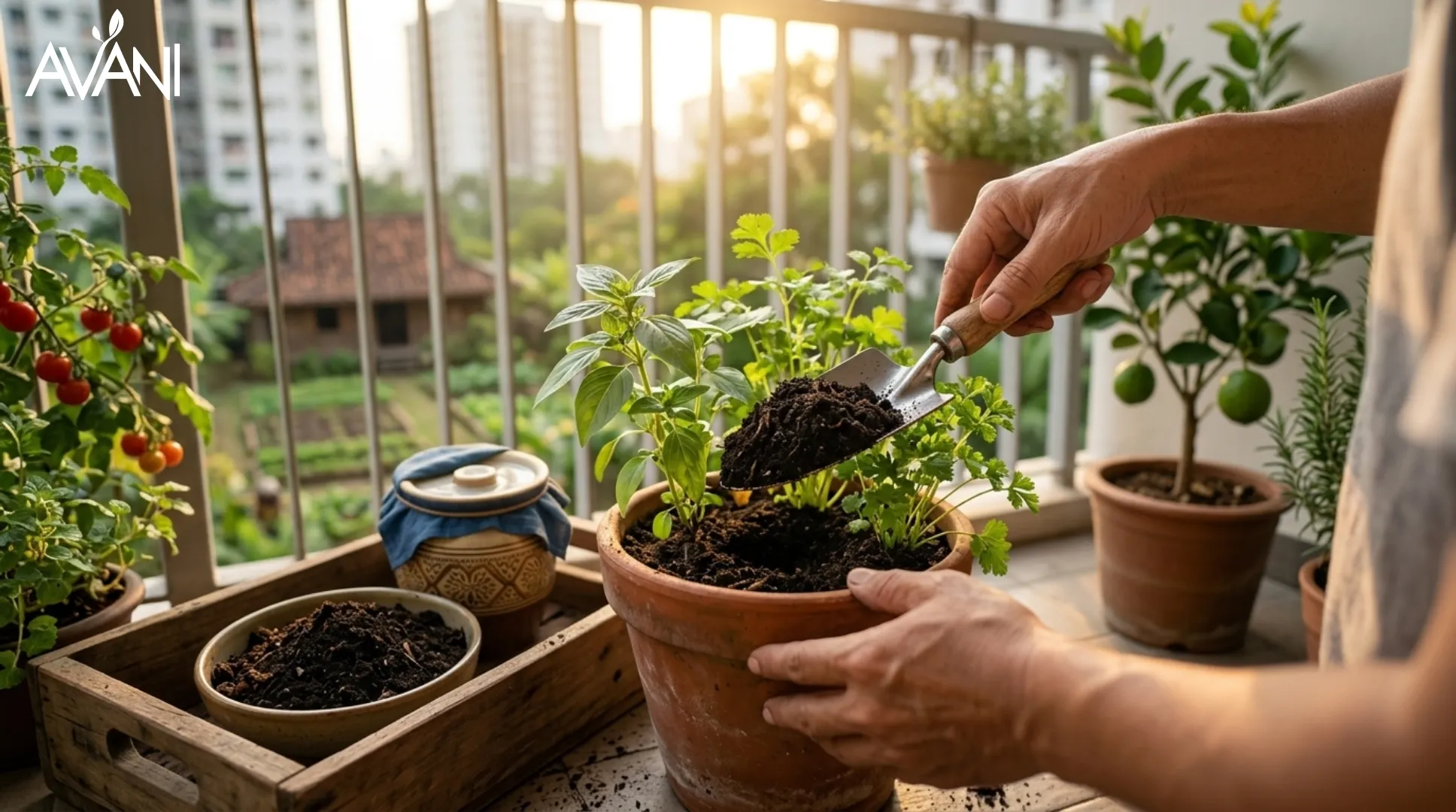
Avani buddies, your first Takakura basket probably will not feel effortless on day one. You may add scraps that are too wet or you may wonder whether the slightly sour smell is normal. Every morning you may open the cover just to see what has changed. That is part of learning.
Once you recognize the right texture, moisture, and smell, the routine becomes much easier and food scraps that once went straight into general waste start to feel like a useful resource.
For household waste that does not belong in your compost basket, Avani Eco’s Garbage Bag Large offers a cassava-based alternative to conventional plastic garbage bags. Start small and mix regularly. Pay attention to the basket and your compost will teach you the rest.