





Avani buddies, it is easy to think of traditional composting as a lot of work. You build a pile, monitor it, turn it regularly and keep checking to make sure everything is breaking down properly. But, what if you could simply build the compost where you want the garden bed and let time do much of the work?That is the idea behind the Lasagna composting method, also known as sheet composting or lasagna gardening.
Rather than turning a compost pile, you layer carbon rich and nitrogen rich organic materials and let them decompose slowly. If you’re new to the basics, our full guide to composting for beginners explains greens, browns, moisture, airflow and how different composting methods work for different homes.
What Is Lasagna Composting?
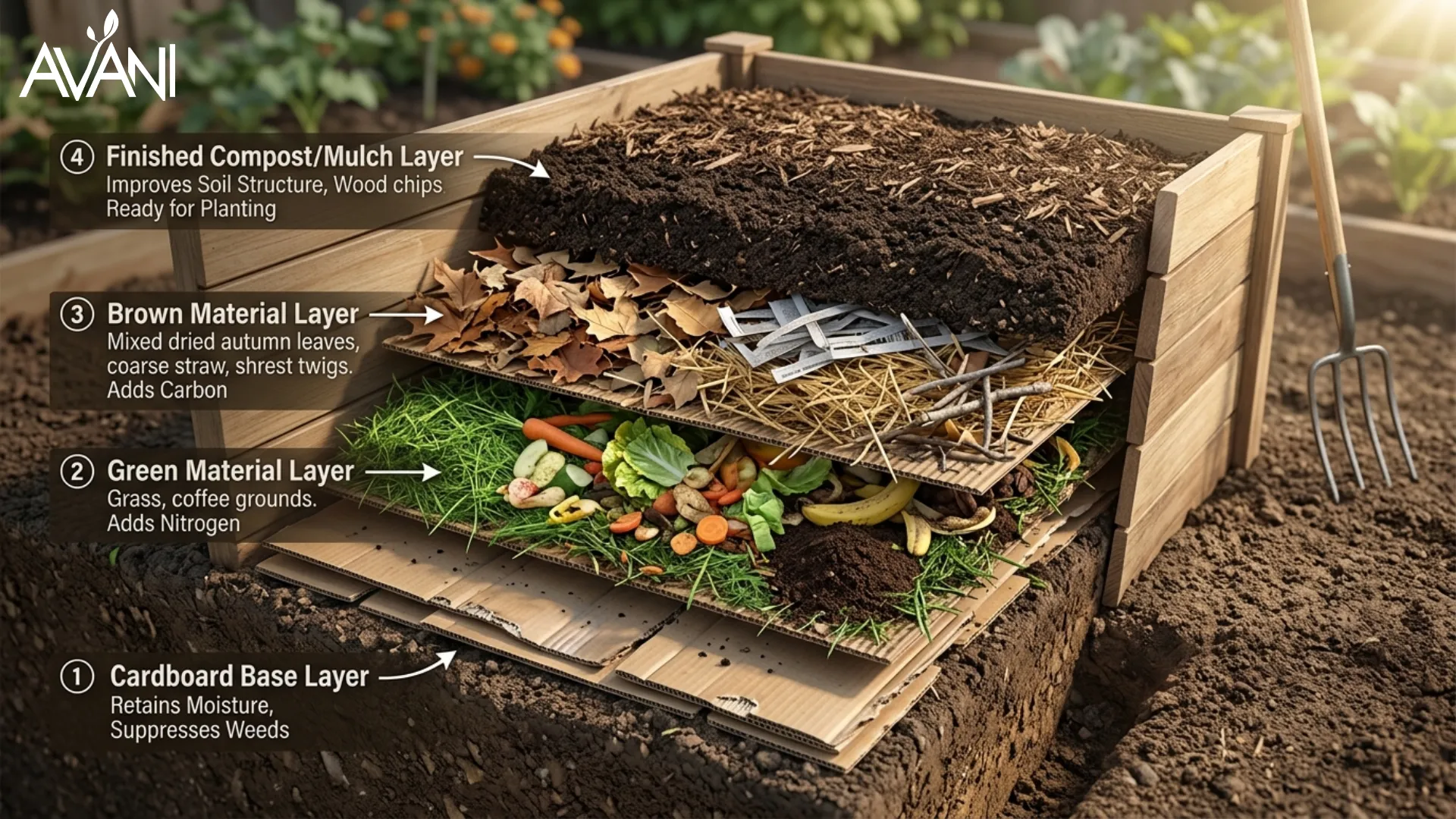
Avani buddies, Lasagna composting is a layered method of no dig composting done right on the ground or in a raised garden bed. You begin with cardboard or paper, then alternate layers of nitrogen rich “greens” with carbon rich “browns.”
Those layers are gradually turned into organic matter that makes a healthier garden soil by microorganisms, soil creatures, moisture and natural decay. The name refers to how the materials are layered—not that food lasagna is a part of your compost.
What Materials Do You Need?
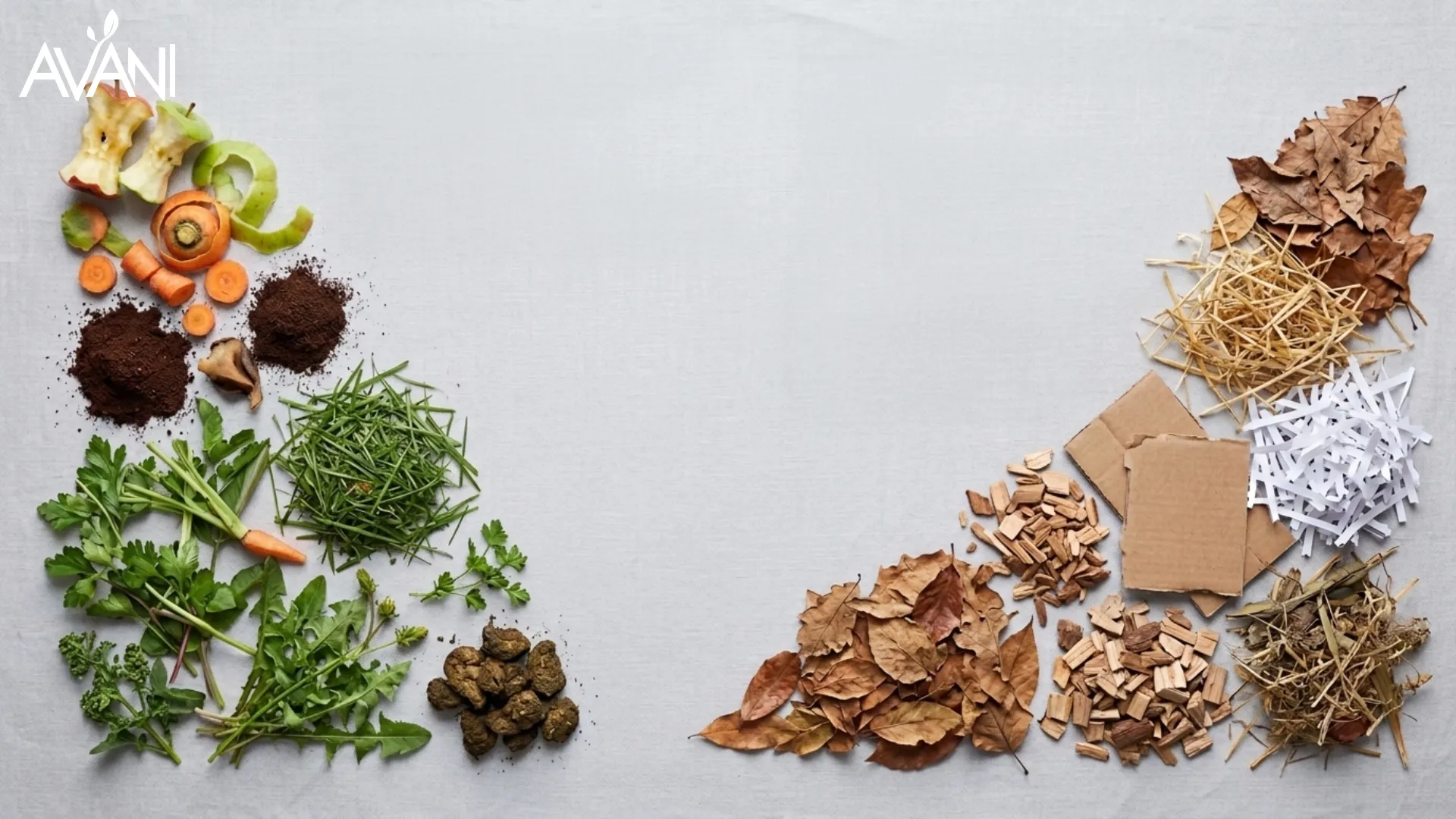
Avani buddies, there’s a few things you need to prepare before doing Lasagna composting method:
Green Materials
Greens are materials that provide more nitrogen. Such as:
- Fruit and vegetable scraps.
- Coffee grounds.
- Fresh grass clippings.
- Fresh plant trimmings.
- Green weeds without mature seeds.
- Aged or appropriate herbivore manure.
Brown Materials
Browns are materials that provide carbon and help cover wetter materials, such as:
- Dry leaves.
- Straw.
- Shredded untreated paper.
- Plain brown cardboard.
- Small wood chips.
- Other dry plant material.
Don’t forget to remove plastic tape, labels, and staples before using cardboard in the bed. Avoid glossy or heavily coated cardboard.
What Should You Keep Out?
Avani buddies, If you’re a just starting to garden at home, avoid materials that could potentially cause pest, odor, or contamination problems, including:
- Meat and fish scraps.
- Dairy products.
- Large amounts of fats or oils.
- Dog or cat waste.
- Diseased plants.
- Coal or charcoal ash.
- Conventional plastic.
- Glass or metal.
Even if a material is labeled “compostable”, check whether it is actually intended for home composting or industrial composting before putting it in your garden.
How to Build a Lasagna Compost Bed Step by Step
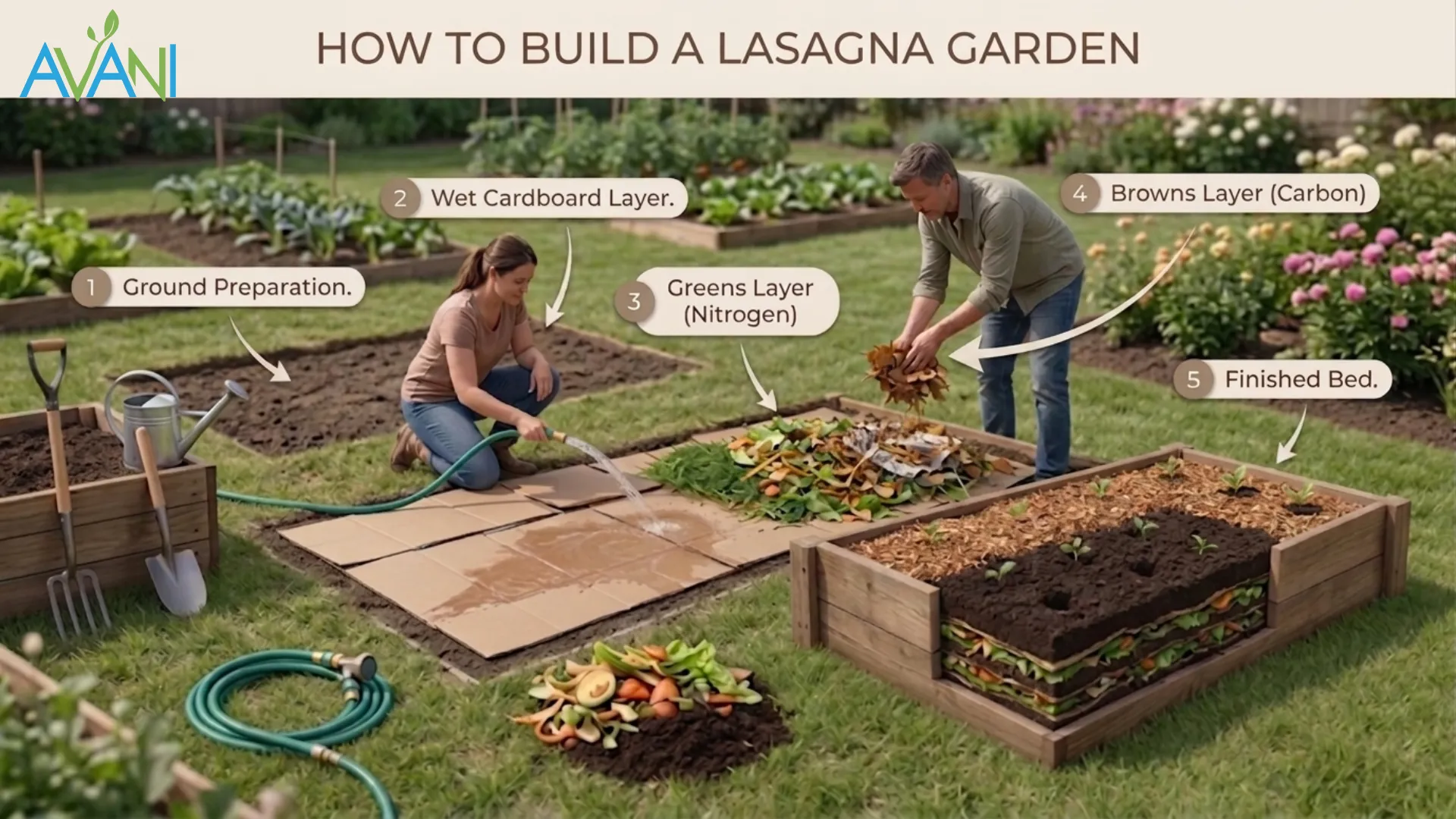
Avani buddies, you can build your own Lasagna composting method in your garden just by following this step:
1. Choose and Prepare the Area
Choose a garden area you can comfortably reach from the sides. Mow grass or other vegetation low and remove persistent weeds. If your soil is heavily compacted, you can improve the drainage and airflow by loosening it gently with a garden fork.
2. Add the Cardboard Base
Lay 4–6 overlapping layers of plain cardboard, newspaper, or heavy paper over the ground. Wet the material completely with water after overlapping the edges to prevent weeds from growing through the spaces. The foundation of your sheet composting system is the cardboard.
3. Add Your First Green Layer
Put a layer high in nitrogen on top of the carbon rich cardboard. Add ingredients such as food scraps, fresh grass clippings, or other appropriate greens.
4. Cover With Browns
Add a comparable layer of shredded paper, straw, dry leaves, or another substance high in carbon.
Oregon State University Extension recommends alternating carbon and nitrogen materials, with individual layers generally around 1–6 inches thick depending on the materials available.
5. Keep Layering
Repeat:
Green → Brown → Green → Brown
As you construct, lightly wet the materials. Continue until the bed is at least 18 inches or more. Because the materials will settle considerably as decomposition proceeds, so a taller mound is acceptable.
Always finish with a brown layer, because that can help cover food scraps, retain moisture, and discourage flies.
Do You Need to Turn on the Lasagna Composting Method?
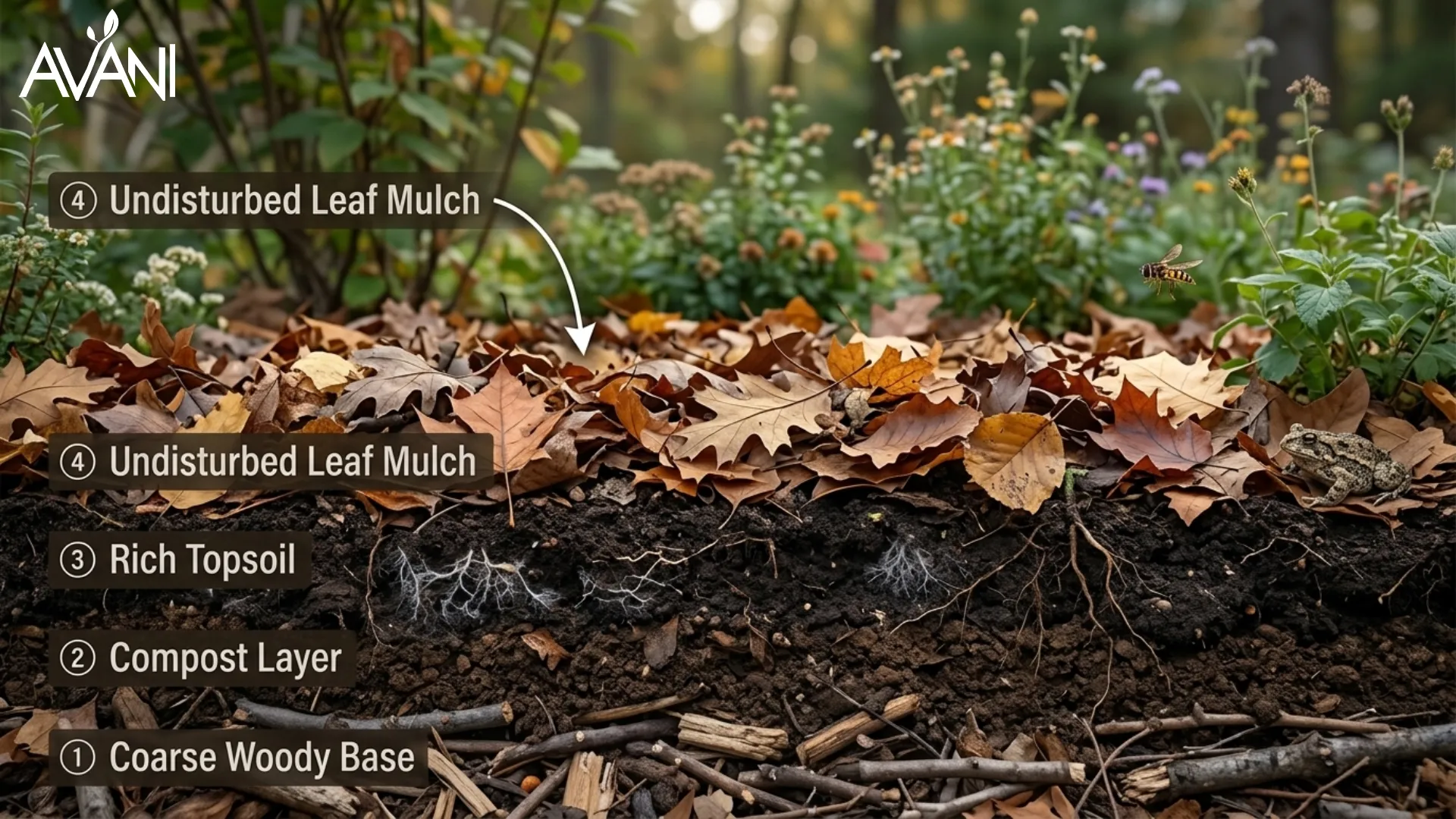
Avani buddies, usually you don’t need to turn on the Lasagna composting method. That is one of the main attractions of the method.
Unlike actively managed hot compost, Lasagna composting is generally treated as a no turn, cold composting system. The layers decompose where they are built.
You still need to watch the moisture. The material should remain damp enough for decomposition but should not become waterlogged.
How Long Does Lasagna Composting Take?
Avani buddies, a realistic goal is about six months, although the rate of breakdown varies with climate, moisture, size of material and thickness of the layer.
Starting a bed in fall, Oregon State says, can allow it to break down through the winter, ready for spring planting in temperate areas. In warm tropical areas microbial activity may continue for much more of the year but heavy rainfall can create the opposite problem: too much moisture.
Troubleshooting Common Problems
The Bed Smells Rotten
It is probably too wet or contains too much nitrogen rich material. Add more dry leaves, straw, or another brown material and make sure excess rain cannot saturate the bed.
Nothing Seems to Be Breaking Down
Check moisture first. Very dry layers decompose slowly. Add water gradually until they are damp, not soaked. Thick woody material also takes much longer than shredded or smaller pieces.
The Bed Is Shrinking
That is normal. As organic material decomposes, the height drops. No turn sheet compost beds may lose a substantial amount of volume over time as the layers settle and become organic matter.
Lasagna Composting vs. Other Composting Methods
Avani buddies, Lasagna composting method works especially well if you have:
- A garden or raised bed.
- Plenty of dry leaves or cardboard.
- Yard and kitchen plant waste.
- Time for gradual decomposition.
- Little interest in turning a compost pile.
If you mainly have kitchen scraps and live in an apartment or smaller urban home, the Takakura composting method for small spaces will usually be the better fit.
Frequently Asked Questions About Lasagna Composting
Is Lasagna Composting the Same as Sheet Composting?
Lasagna composting is a type of sheet composting where you layer carbon and nitrogen rich materials right on the soil.
Does Lasagna Composting Method Need to Be Turned?
Usually not. It is designed as a relatively low maintenance, no turn system that decomposes gradually in place.
Can I Put Food Scraps in Lasagna Compost?
Plant based kitchen scraps such as fruit and vegetable waste can be used as green material. To reduce odors and pest attraction you can cover them completely with brown material.
Build Your First Layer of Lasagna Composting Method
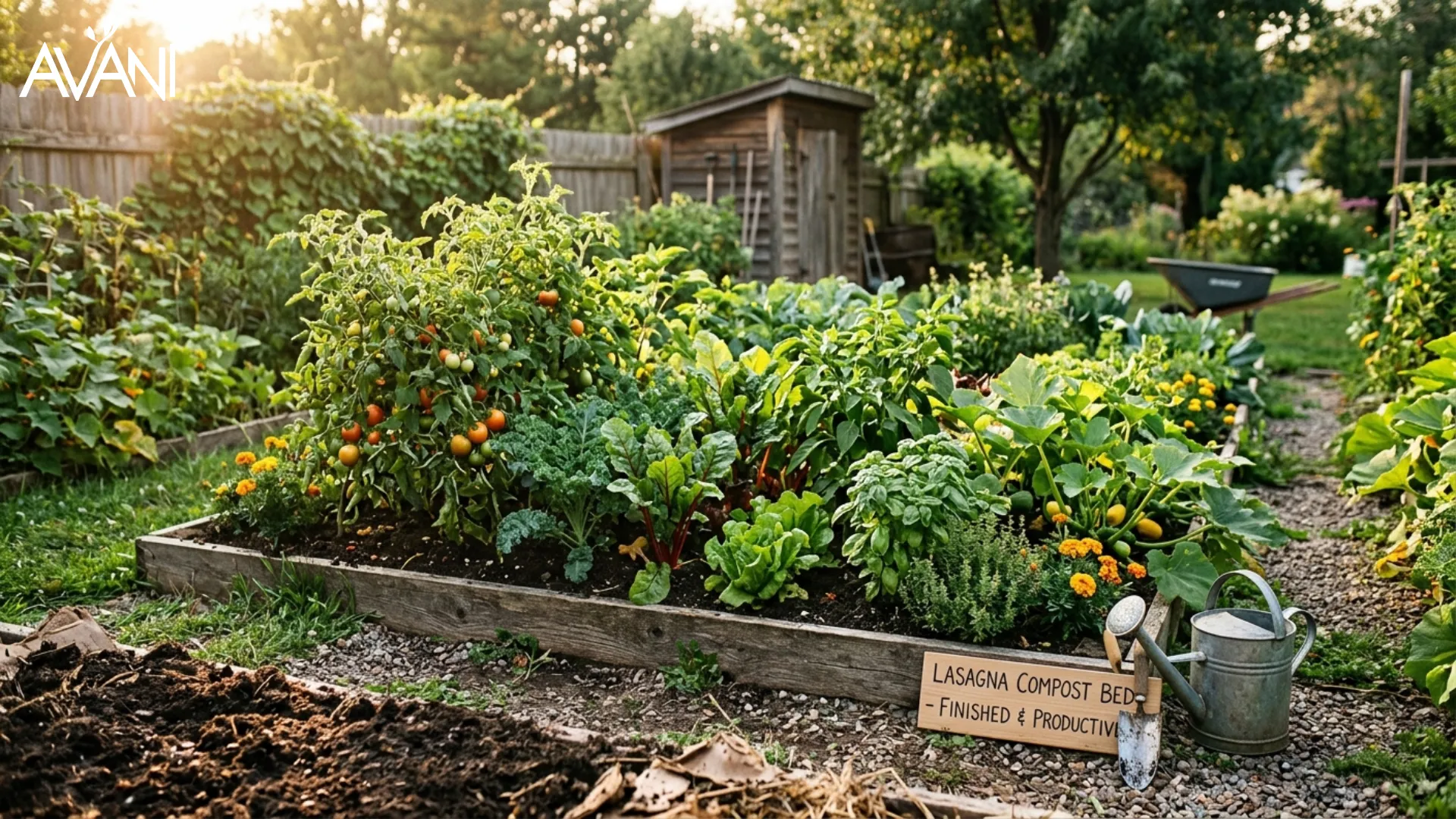
Avani buddies, Lasagna composting method is forgiving because you do not need to master everything on day one. Start with cardboard. Add greens. Cover them with browns. Keep the layers damp. Then let time and microorganisms do their quiet work beneath.
After a few months that pile of what looks like leaves, cardboard and kitchen scraps starts to settle down into something darker, softer and much more useful for your garden.
And for household waste that should stay out of your compost bed, Avani Eco’s Garbage Bag Large offers a cassava based, bio based alternative to conventional plastic garbage bags.
You do not need a perfect compost system. Start from picking a small area of your garden and build your first layer then you can learn by doing it.