





Avani buddies, composting can turn everyday organic waste into something useful. Such as, a stable soil amendment that can improve soil structure, moisture retention, and biological activity. But why must we do that? According to UNEP’s Food Waste Index Report 2024, the world generated about 1.05 billion tonnes of food waste in 2022, and 60% came from households. Food loss and waste are associated with an estimated 8–10% of global greenhouse gas emissions.
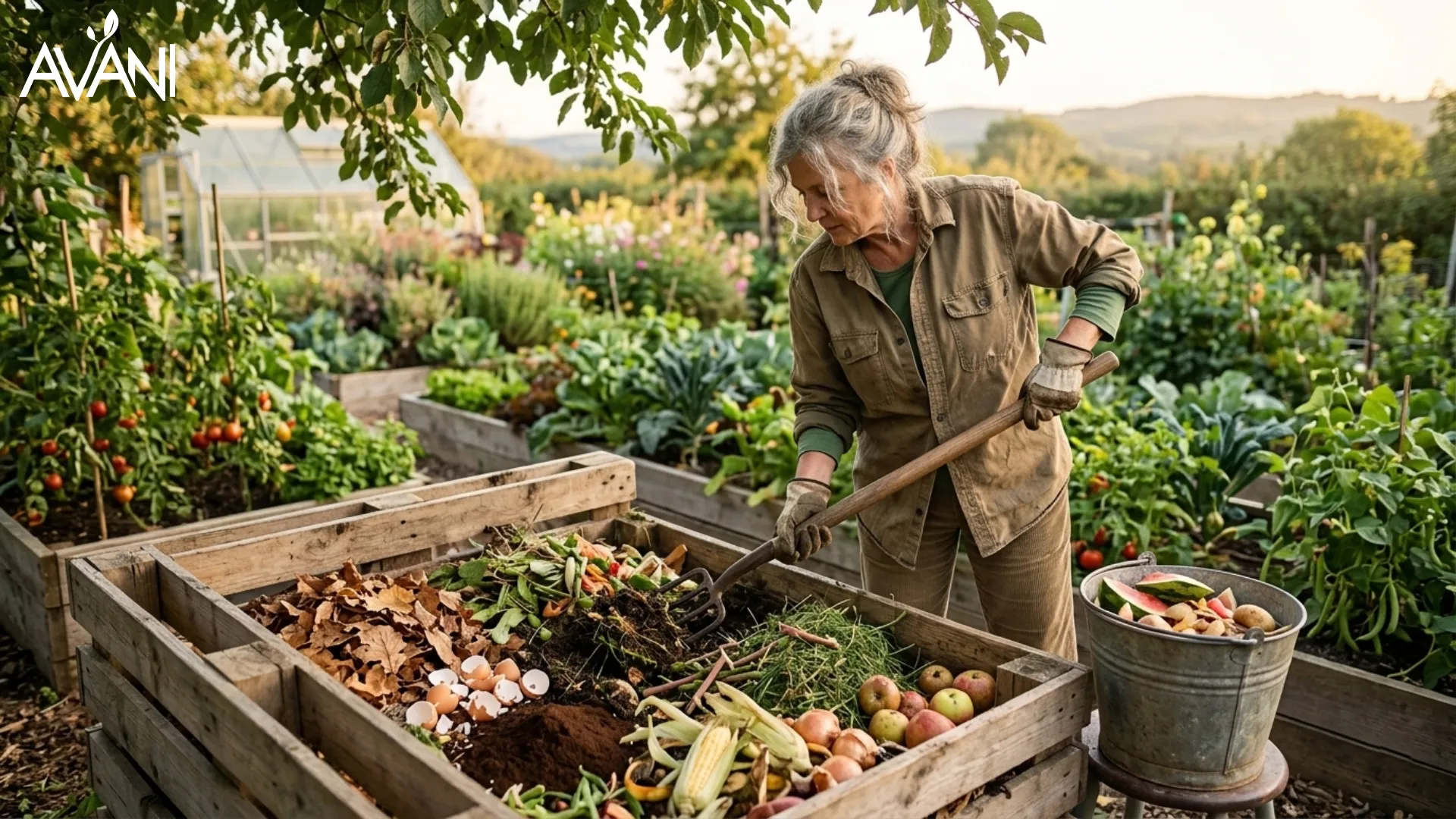
As we know, composting is essentially a controlled, oxygen-supported process of organic matter decomposition carried out by microorganisms. Give those microbes the right balance of carbon, nitrogen, moisture, and air, and kitchen scraps and garden waste gradually become dark, crumbly compost. This guide explains the fundamentals, helps you choose the right method, and shows you what to do when your compost smells, dries out, attracts pests, or simply refuses to break down.
Why Composting Matters for Sustainability?
Avani buddies, organic waste behaves differently in a compost system than it does in a landfill. Inside many landfills, food decomposes under low-oxygen conditions and generates methane. A U.S. EPA analysis found that food waste represented about 24% of municipal solid waste sent to U.S. landfills but was responsible for an estimated 58% of their fugitive methane emissions.
Composting keeps suitable organic materials in an aerobic process instead. The finished material also has another useful destination, that is soil. EPA’s 2023 review found that compost can increase soil organic matter, microbial biomass, porosity, aeration, and water-holding capacity while reducing bulk density and erosion risk.
In other words, creating compost does two jobs at once. First is, it diverts organic material from disposal, and second is, returns carbon and nutrients to soil.
How Actually the Composting Process Works?
A healthy compost system depends on four basic factors:
- Carbon for microbial energy.
- Nitrogen for microbial growth.
- Moisture for biological activity.
- Oxygen for aerobic decomposition.
Balance Greens and Browns
“Greens” are generally nitrogen-rich materials such as:
- Fruit and vegetable scraps.
- Coffee grounds.
- Fresh grass clippings.
- Fresh plant trimmings.
“Browns” provide more carbon and structure:
- Dry leaves.
- Straw.
- Small woody material.
- Untreated shredded cardboard or paper.
Rather than assuming that every pile needs exactly equal amounts by weight, think about the underlying carbon to nitrogen ratio.
For efficient active composting, a starting C ratio around 25:1 to 30:1 by weight is a useful target. Too much nitrogen can create ammonia like odors, while too much carbon can slow decomposition.
Keep Moisture Similar to a Wrung-Out Sponge
A practical moisture range is roughly 40–65%, with around 50–60% preferred for rapid composting.
You do not need laboratory equipment to check this. Pick up a handful with gloves and squeeze it. It should feel damp but should not release more than a few drops of water.
Give the Pile Enough Air
Microorganisms involved in aerobic composting need oxygen.
Turning, stirring, or creating air spaces prevents the material from becoming compacted. When a wet pile smells sour or rotten, insufficient aeration is often part of the problem.
What Can and Cannot Go Into Home Compost?
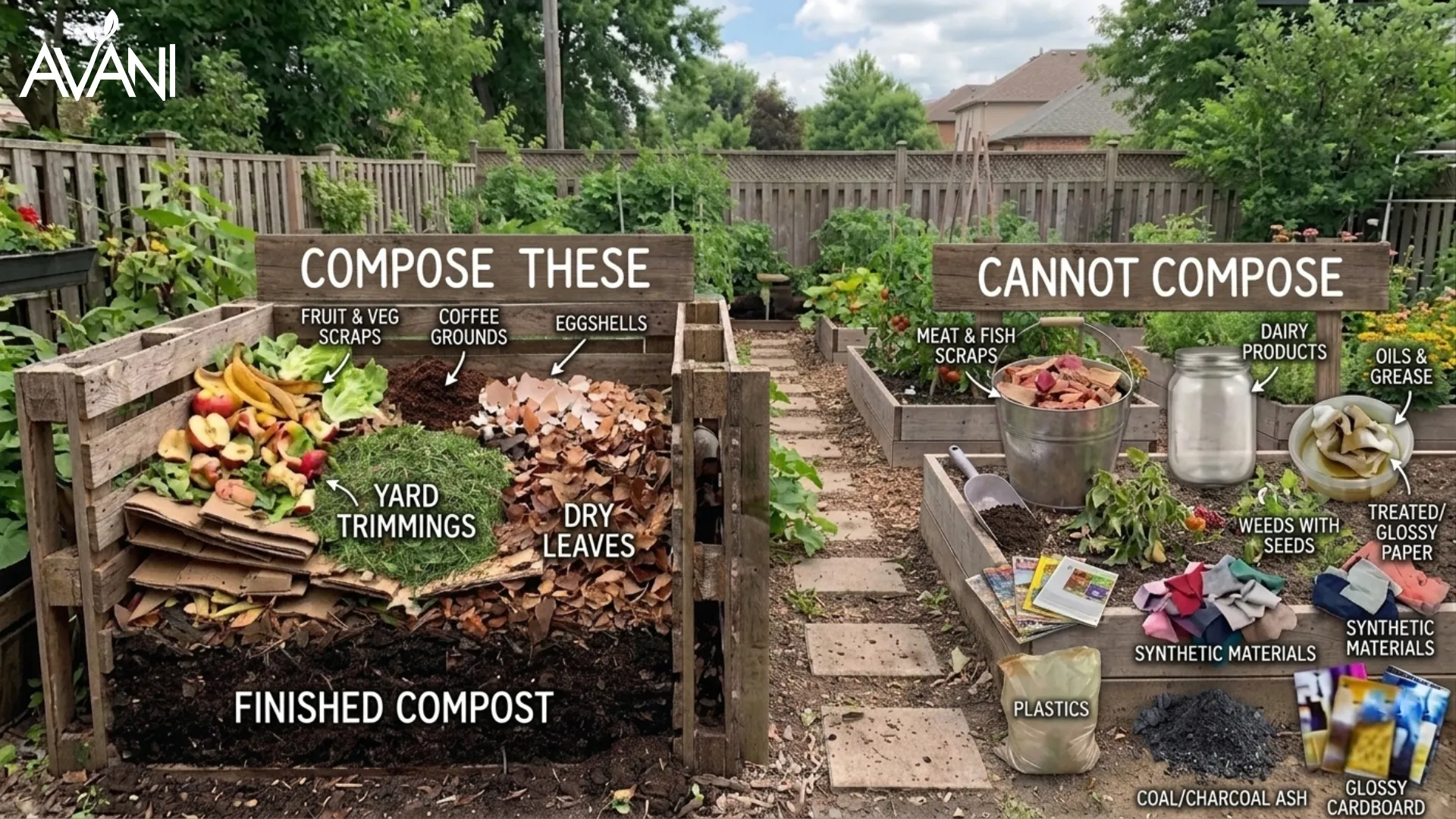
Most beginner systems work best with plant-based organic materials.
Good Materials to Compost
Use a mixture of:
- Fruit and vegetable scraps.
- Coffee grounds and tea leaves.
- Dry leaves.
- Grass clippings.
- Small plant trimmings.
- Straw.
- Untreated paper or cardboard in appropriate amounts.
Materials Beginners Should Usually Avoid
Avoid adding:
- Meat and fish.
- Dairy products.
- Large amounts of oil or grease.
- Pet waste.
- Diseased plants.
- Coal or charcoal ash.
- Glass, metal, and conventional plastic.
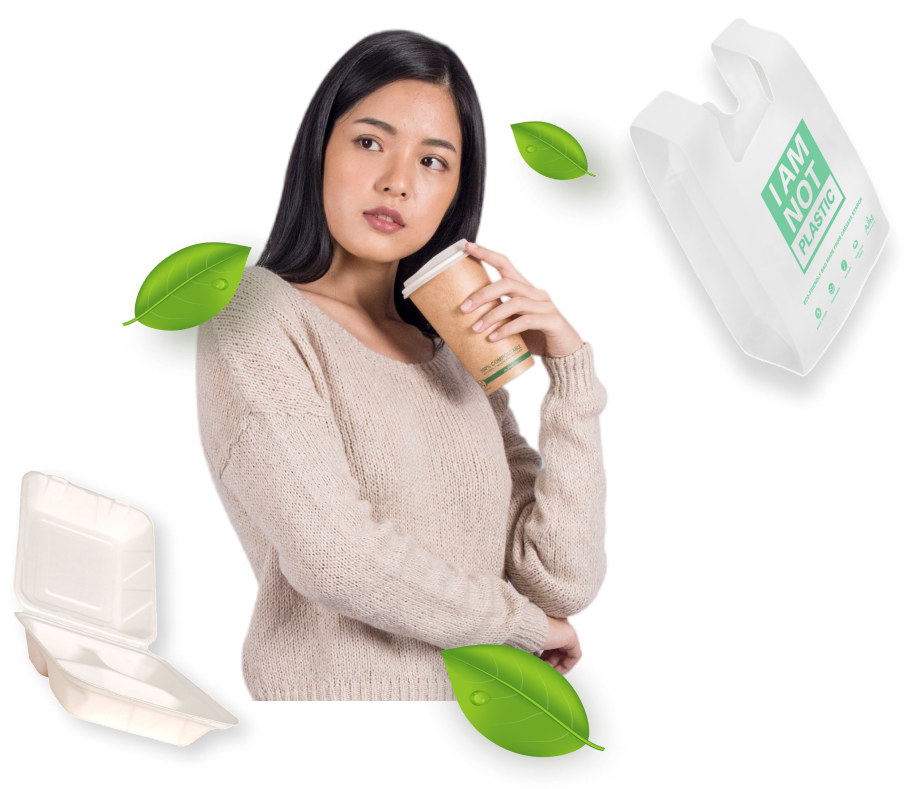
Also check disposal instructions before putting compostable packaging into a home system. Some products are designed specifically for commercial or industrial composting conditions rather than backyard compost.
How to Start Composting at Home
Avani buddies, you do not need expensive equipment to start composting. For a basic system, just prepare:
- A compost bin, basket, or designated pile.
- Dry brown material.
- Fresh green material.
- Water.
- A garden fork, compost aerator, or mixing tool.
- Optional compost thermometer.
- A breathable cover or rain protection where needed.
Then:
- Start with coarse brown material to create airflow.
- Add a mixture of greens and browns.
- Chop large materials so microorganisms have more surface area to work on.
- Add moisture until the material feels like a wrung-out sponge.
- Keep the system aerated.
- Continue adding suitable organic waste according to the method you choose.
Which Composting Method Is Right for You?
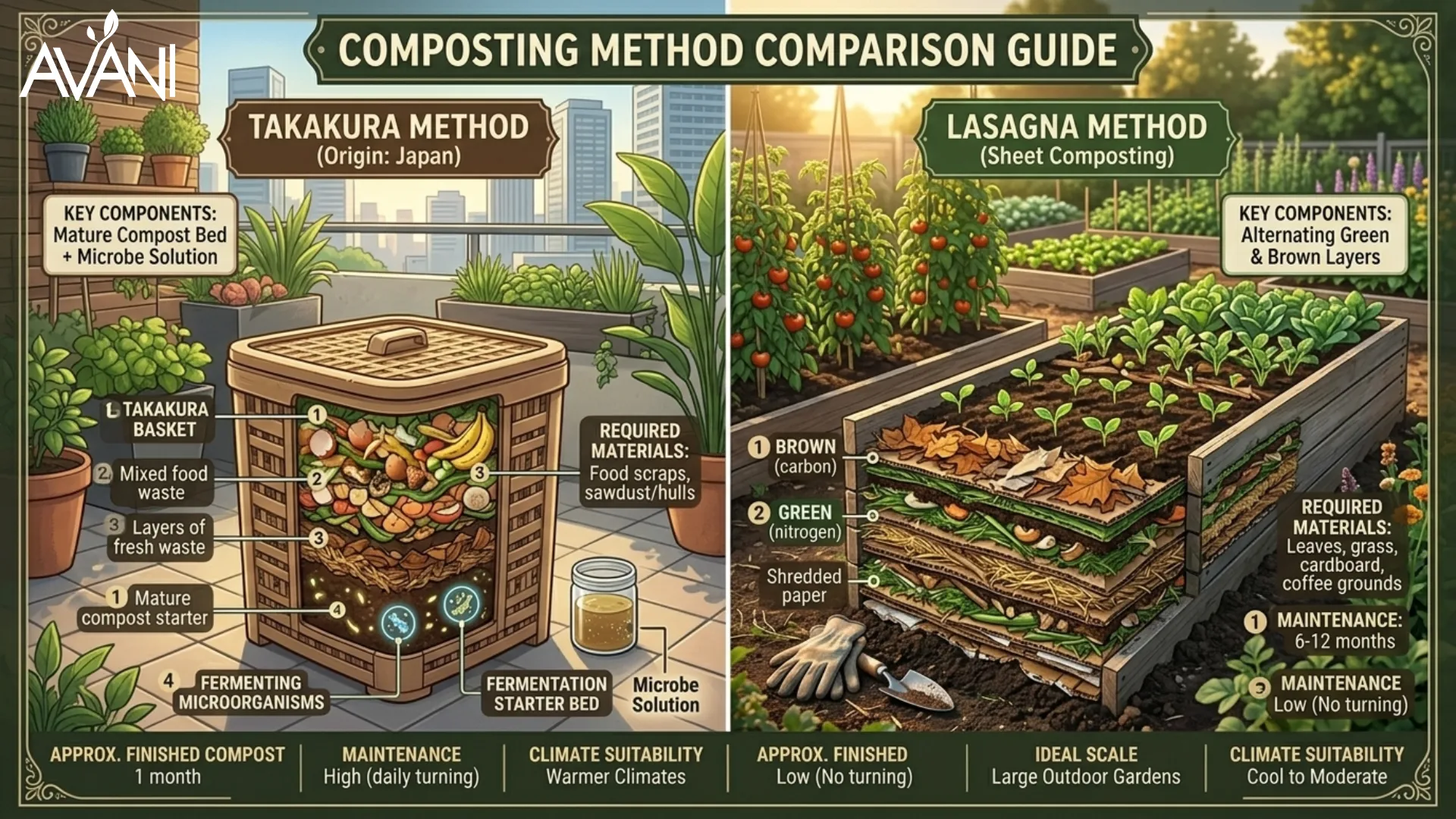
Avani buddies, there is no single best method. Choose based on your space, waste volume, available materials, and how much maintenance you want.
For apartments, balconies, and small urban homes: choose a compact basket-based system. Read the step-by-step Takakura composting setup for small spaces.
For garden beds and larger outdoor areas: a layered system can process garden and household organic material with relatively little turning. Read the complete Lasagna composting guide for garden beds.
As a simple rule:
- Limited space + regular kitchen scraps → Takakura
- Garden space + plenty of leaves/cardboard → Lasagna
- Large volume + willing to turn frequently → traditional hot pile
- Low-maintenance outdoor decomposition → passive or layered composting
Takakura Composting for Small Urban Spaces
Takakura composting uses a breathable container and a microorganism-rich fermentation bed. Avani’s original method uses rice bran and rice husks in a 1:1 ratio as part of that bed.
It is particularly useful when you produce kitchen scraps but do not have enough space for a large outdoor pile.
Because the contents are mixed regularly, you become familiar with healthy compost quickly. A good basket feels moist and loose and has an earthy or mildly fermented smell—not the sharp odor of rotting waste.
Lasagna Composting for Garden Beds and Larger Spaces
Lasagna composting builds organic material in layers rather than requiring you to constantly turn a traditional pile.
The approach is especially convenient when you have:
- Dry leaves
- Cardboard
- Plant trimmings
- Garden space
- Time to let decomposition happen gradually
Think of it as building a layered organic bed: carbon-rich material and nitrogen-rich material are arranged so microorganisms can break them down over time.
It is less suited to a tiny apartment but can be an easy way to turn garden waste into improved soil with relatively low day-to-day maintenance.
Frequently Asked Questions About Composting
Does Composting Always Smell Bad?
No. Healthy aerobic compost should smell earthy. Strong rotten odors usually signal excessive moisture, insufficient airflow, or unsuitable materials.
How Often Should I Turn Compost?
A fast hot pile may be turned when it heats and begins to cool, while Takakura material is mixed much more frequently. Lasagna composting requires far less turning. The right schedule depends on the method rather than one universal rule.
Can I Compost If I Live in an Apartment?
Yes. You do not need a backyard to compost organic waste. Compact systems such as Takakura are designed around a contained, breathable setup that can fit much smaller living spaces.
Composting Is a Practical Step Toward Sustainable Living
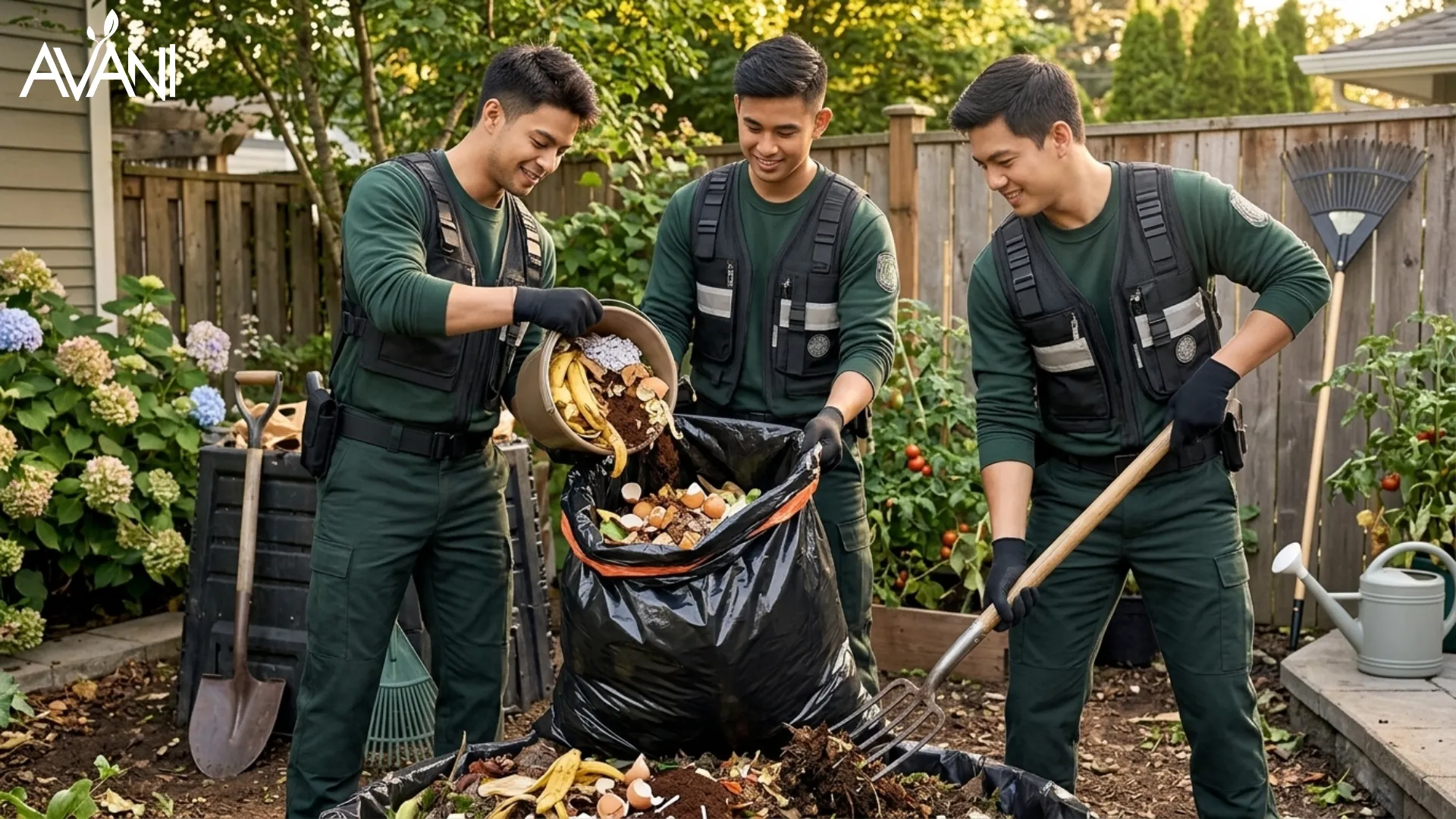
Avani buddies, composting begins with something ordinary, noticing what is left after preparing a meal or cleaning a garden. Over time, that small habit changes how you see waste. Vegetable scraps become microbial food. Dry leaves become carbon. What once filled a garbage bin becomes dark material you can hold in your hand and return to the soil.
That is what makes composting such an accessible entry point into sustainable living. It reduces the amount of organic waste leaving your home while creating visible evidence that natural materials can move through a cycle rather than simply becoming trash. Start with the method that fits your space, learn how moisture and air affect decomposition, and let your first batch teach you the rest. To improve further your sustainability journey, you can use Avani Cassava Garbage bag, that purely made from cassava starch. Which is compostable in a month so you can use that to collect your organic waste.