





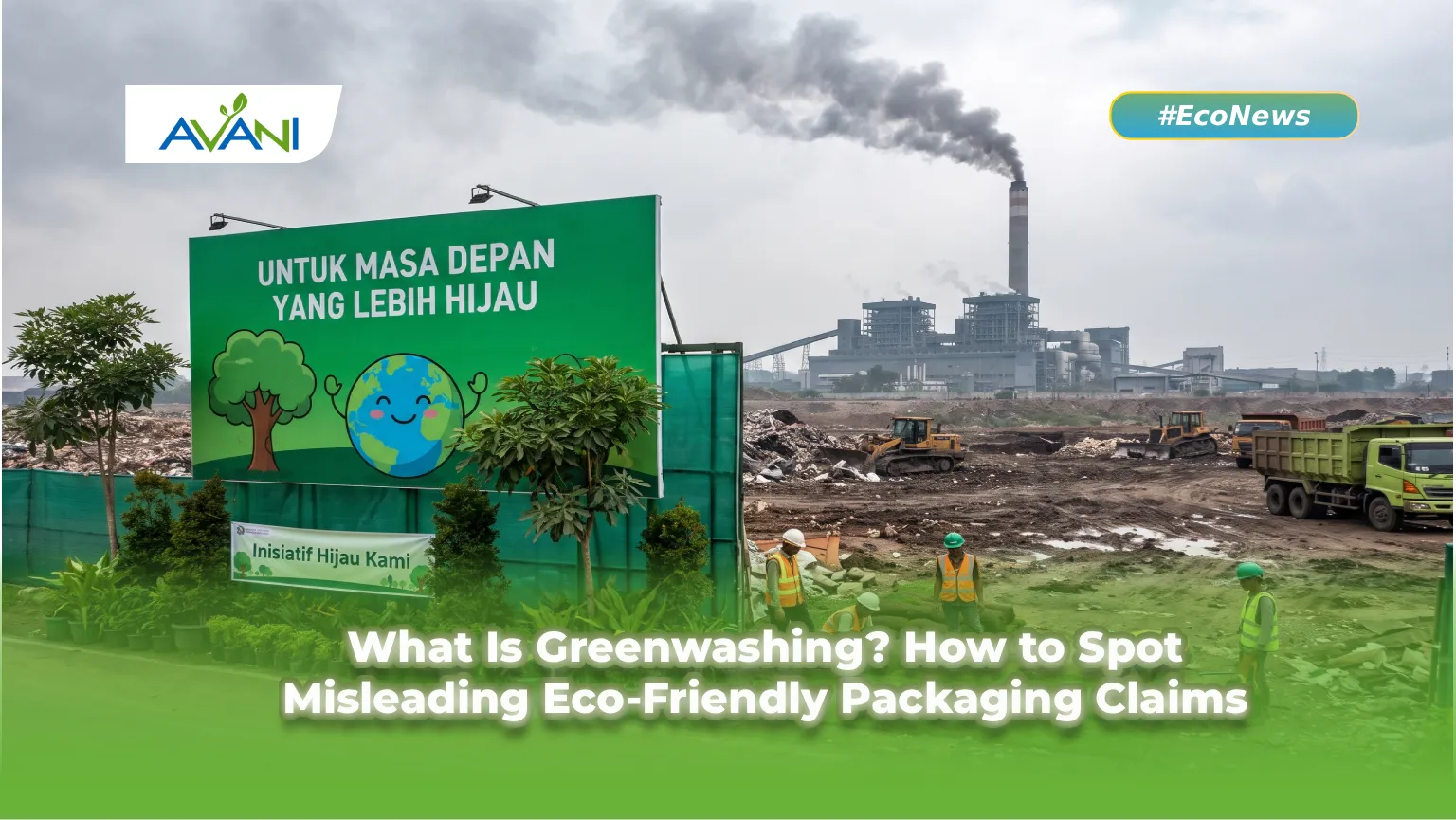
Avani Buddies, greenwashing is a marketing practice where companies make eco-friendly claims without real proof. This practice can seriously damage brand reputation and consumer trust.
In fact, many industries slap on terms like “eco-friendly” without enough evidence. Have you ever seen green packaging featuring leaf images or phrases like “save the earth”? These products may seem eco-friendly at first glance.
In reality, a green look doesn’t always reflect what the packaging is really made of. Therefore, don’t let green visuals fool you. Learn to spot greenwashing and check the claims printed on packaging!
What Is Greenwashing?
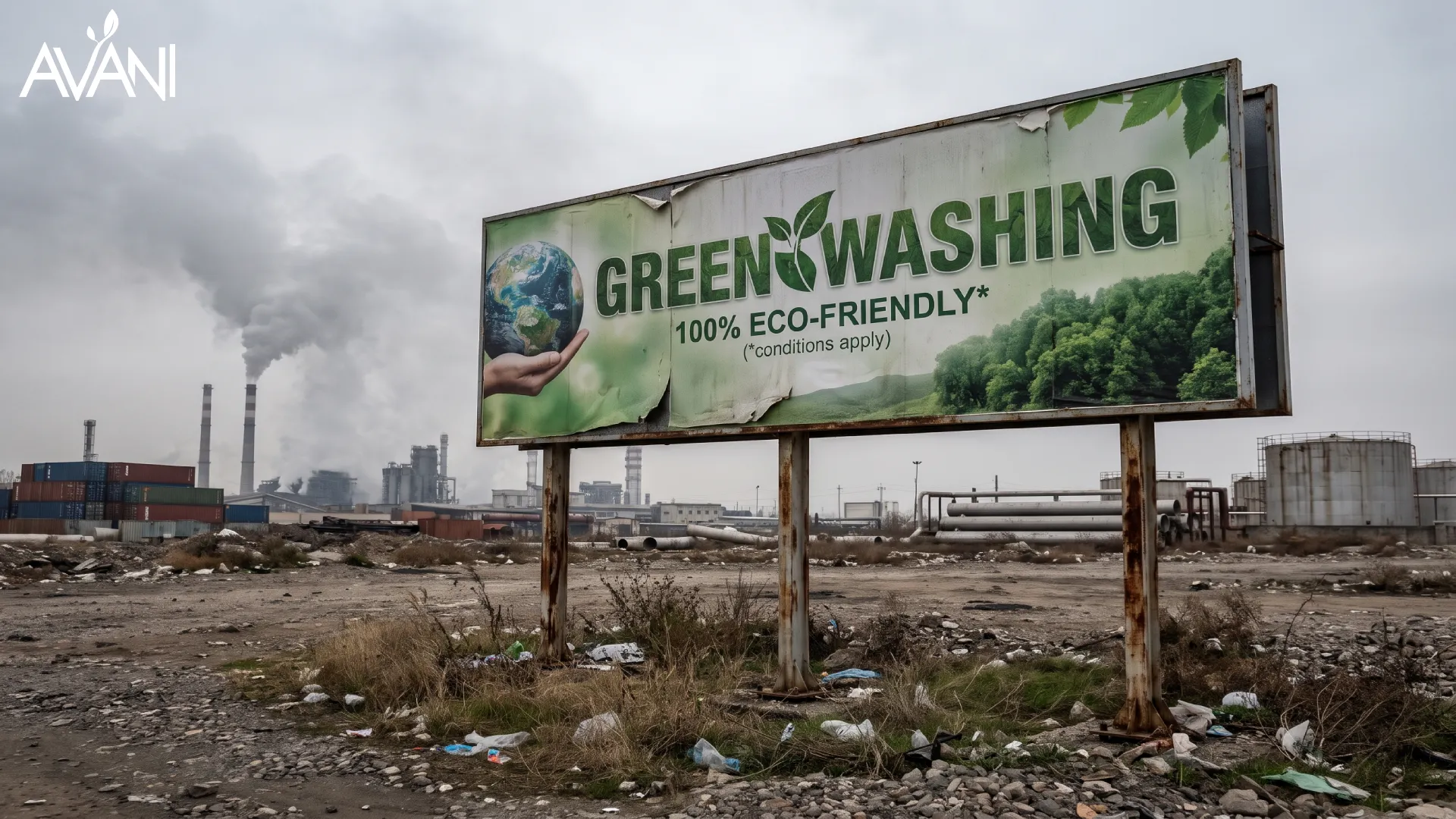
Avani Buddies, greenwashing means exaggerating environmental information. The goal is to make a product look more sustainable than it really is. Many companies promote their products, services, and programs as environmentally friendly.
However, 40% of these claims lack evidence. Of course, greenwashing is a harmful deception that threatens the planet and its inhabitants. Furthermore, this practice undermines efforts to achieve a sustainable lifestyle.
What Are the Characteristics of Greenwashing?
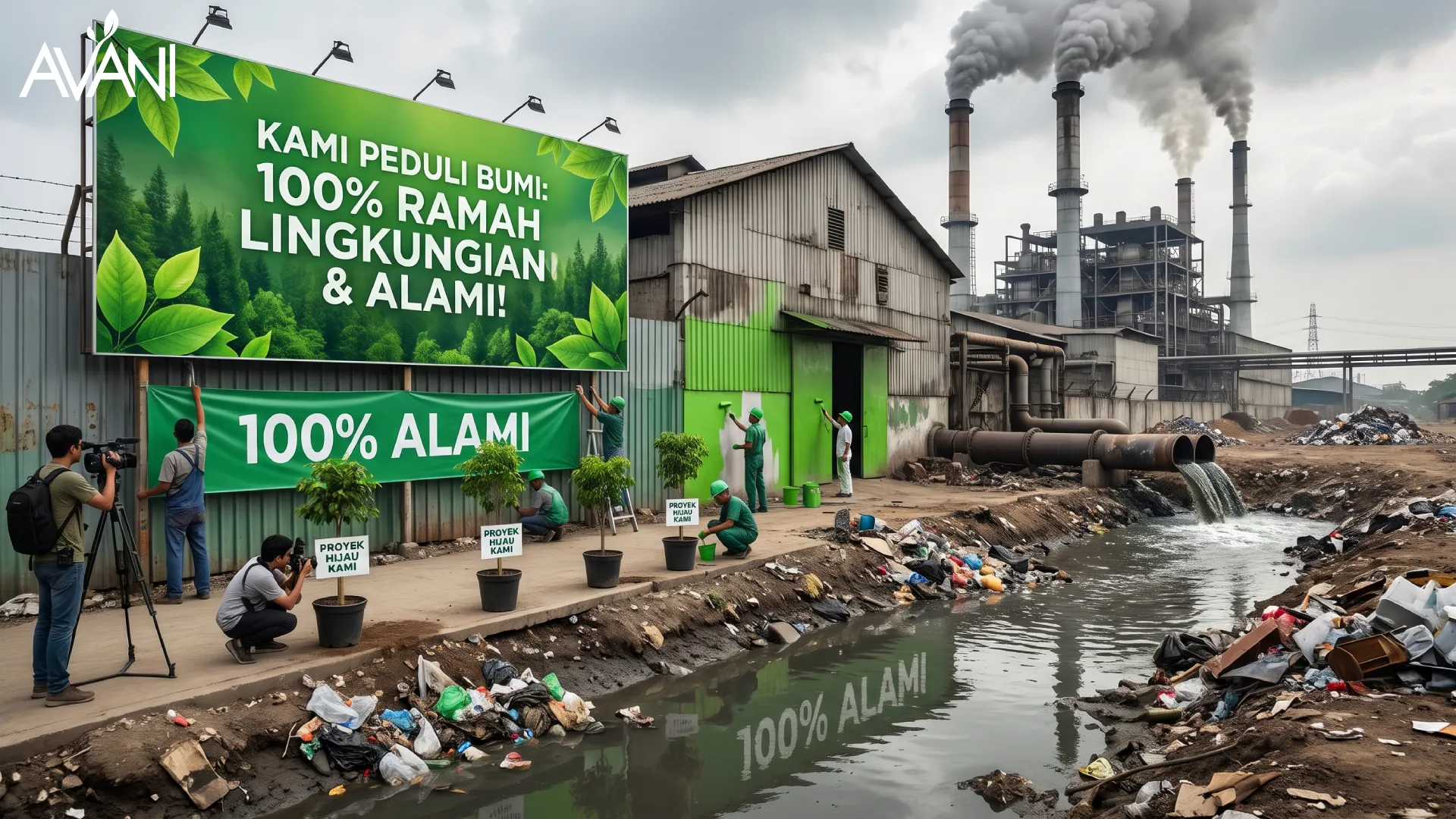
Avani Buddies, you can spot greenwashing by looking for a few telltale signs in a company’s environmental messaging. Here are some of the most common examples:
1. Exaggerated Claims Without Explanation
First, watch out for excessive claims like “100% eco-friendly.” These claims can be misleading if there is no clear environmental benefit provided. Sometimes, companies use such statements as branding without ever verifying them.
You have to double-check whether the brand has certifications such as FDA Compliance, FSC (Forest Stewardship Council). In Indonesia, the standard used is SNI Ekolabel.
2. Using Unclear Symbols or Certifications
Next, beware of logos with leaves or the earth that show no official environmental certification. So, check the certifying institution’s name and its standards to see if the product is truly certified.
3. Highlighting One Benefit While Ignoring Others
Lastly, some packaging that uses less material does not necessarily have a lower environmental impact. For instance, weigh material reduction against product protection, distribution, and waste management.
What Are Examples of Greenwashing on Packaging?
Avani Buddies, greenwashing on packaging often means making environmental claims without proof. Here are several examples of such claims on packaged products:
| Claim to Watch Out For | Why Is It Risky? | Better Alternative |
| 100% environmentally friendly | Too broad | Specify proven, specific environmental benefits |
| Decomposes in 30 days | Does not explain testing conditions | State the method, conditions, and test results |
| 100% recyclable | Local facilities may not accept it | Clarify which parts are recyclable and the processing path |
| Made from natural materials | Source does not prove overall impact | Explain composition and material sources |
| Plastic-free | May not match actual layers or components | Accurately describe the entire material structure |
The Effects of Greenwashing
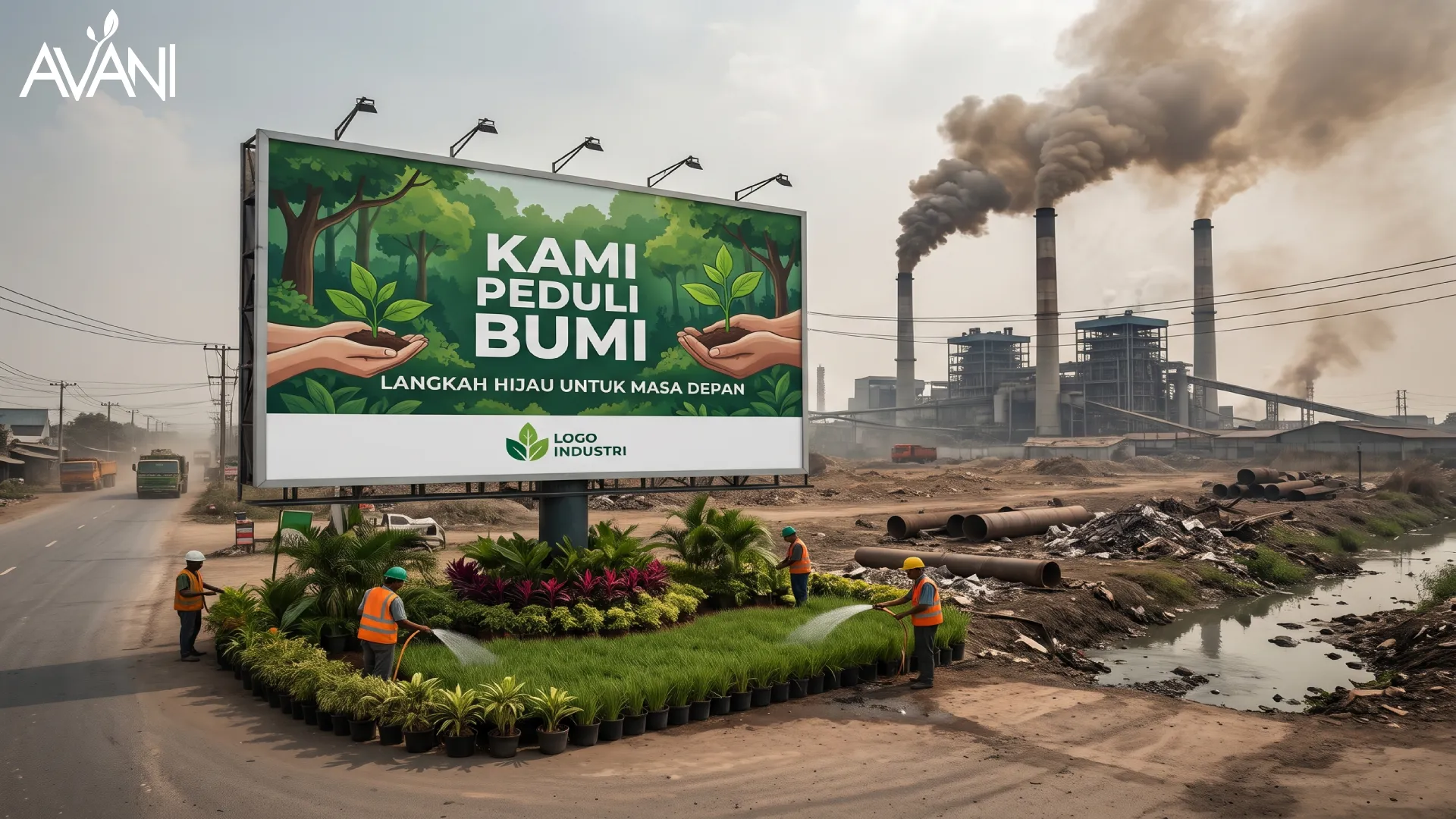
Avani Buddies, greenwashing has serious negative effects on companies, consumers, and even the environment. It also creates false perceptions and hinders progress toward more responsible business practices. Here are the impacts you should know about:
- Consumers feel deceived and become more skeptical of environmental claims.
- A company’s image can suffers, and business partners may trust it less.
- Investors feel less motivated to invest in eco-friendly initiatives.
- Inaccurate eco-friendly labels give shoppers a false sense of security. As a result, people may end up using more resources and creating more waste.
Support Sustainable Business with Eco-Friendly Packaging

Avani Buddies, choosing the right packaging can help your business implement sustainable principles. One important step is to use renewable raw materials and choose packaging with biodegradable and compostable certification. Avani offers bio-based packaging that uses materials like cassava starch and other natural ingredients. In addition to utilizing renewable resources, Avani products offer several advantages, including:
- Biodegradable and Compostable: Avani products carry biodegradable and compostable certification under applicable standards. Such as FDA Compliance, FSC (Forest Stewardship Council), and SNI Ekolabel.
- Closed-Loop Circular Economy: Supports maximizing material value and recovering materials at the end of their lifecycle.
- Sustainability-Driven Packaging: Uses raw materials from renewable resources.
- Fully Customizable: You can freely customize your packaging design and specifications to your business needs.
With Avani, businesses can explore packaging options like cassava bag, paper cup, PLA, and bagasse. Be sure to understand each material’s characteristics and disposal requirements. That way, your environmental claims stay accurate and transparent.
Conclusion
Avani Buddies, greenwashing is a practice that can mislead consumers through excessive and unclear environmental claims. This approach often makes a company’s products look greener than its competitors. The aim is to attract more customers and boost sales.
To recognize greenwashing, pay attention to the colors and symbols on packaging. Also, check the composition, certifications, and disposal methods after use. For brand owners, transparency is essential for communicating a package’s true benefits and promoting responsible practices. Your customers are paying closer attention than ever. Give them a reason to believe in you.
With Avani’s certified, bio-based packaging, your sustainability story is real, clear, and proud to print. Reach out to Avani and let’s build packaging you can stand behind.
Q&A
Q: What is greenwashing?
A: Greenwashing refers to environmental claims or statements that are unfounded, misleading, or irrelevant, making a product or company appear more environmentally friendly than it actually is.
Q: Does the green color on packaging count as greenwashing?
A: Not always. Green is simply a design element. However, its use can be part of greenwashing if it creates an environmental impression that is not supported by actual information.
Q: Does a recycling logo guarantee that packaging is recyclable?
A: No. The recycling symbol may indicate the type of material or provide other information, but it does not necessarily mean the packaging is accepted by local recycling facilities.