






Avani buddies, a zero waste lifestyle is not about fitting a year’s worth of trash into one jar or never throwing anything away again. It is about making more thoughtful choices about what we use, so materials that become waste will be fewer.
For beginners like us, we can start by refusing items you do not need, buying less, reusing what you already own, recycling correctly, and composting suitable organic waste. Small changes are often more impactful than trying to overhaul every habit at once.
What Is a Zero Waste Lifestyle?
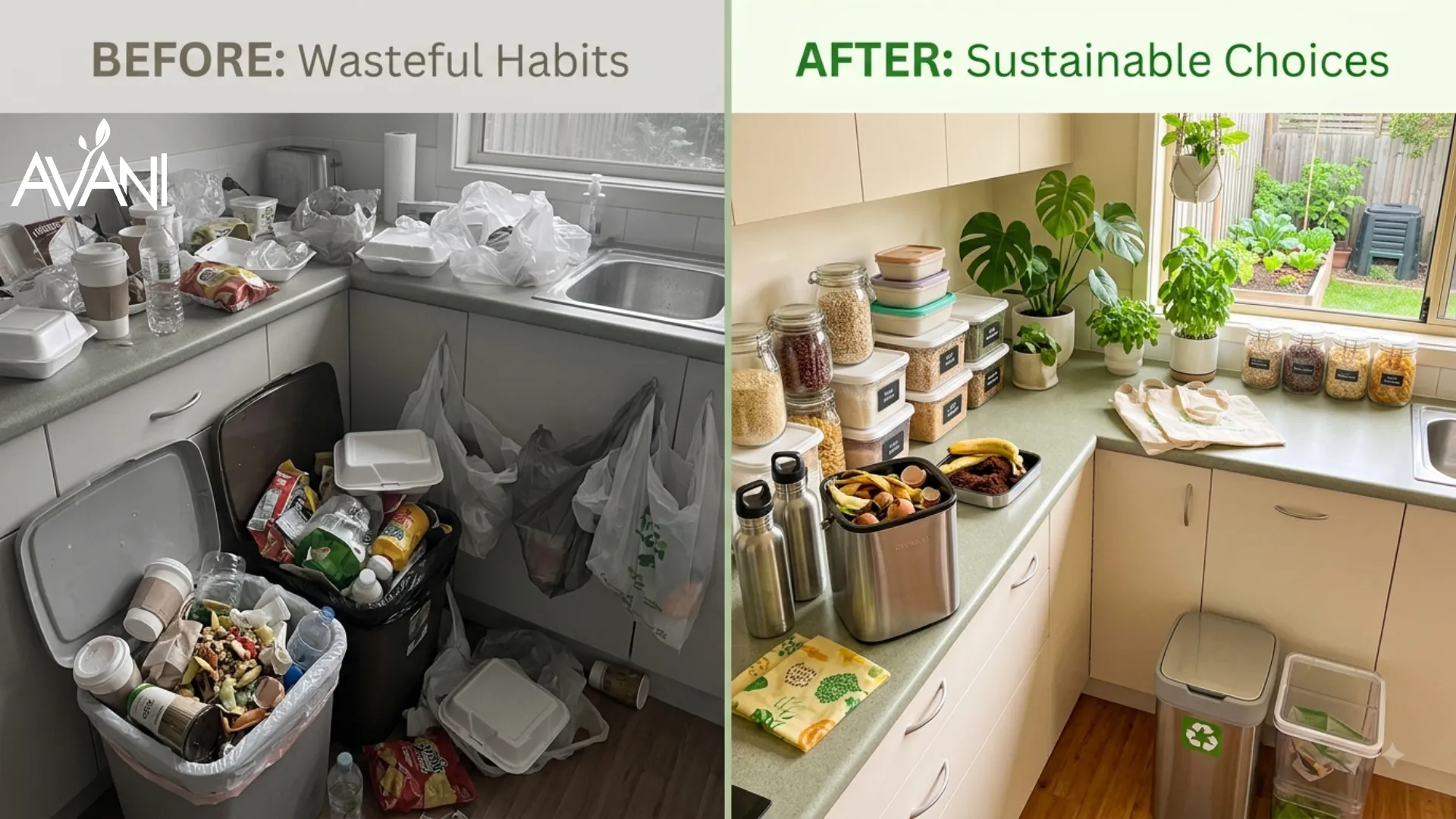
Avani buddies, a zero waste lifestyle aims to prevent waste and keep products, packaging, and materials in use for as long as possible. It prioritizes responsible consumption, reuse, recycling, and recovery, rather than considering disposal as the first option.
In our everyday life, the idea can be simplified through the 5R principles: Refuse, Reduce, Reuse, Recycle, and Rot.
The 5R Principles of Zero Waste
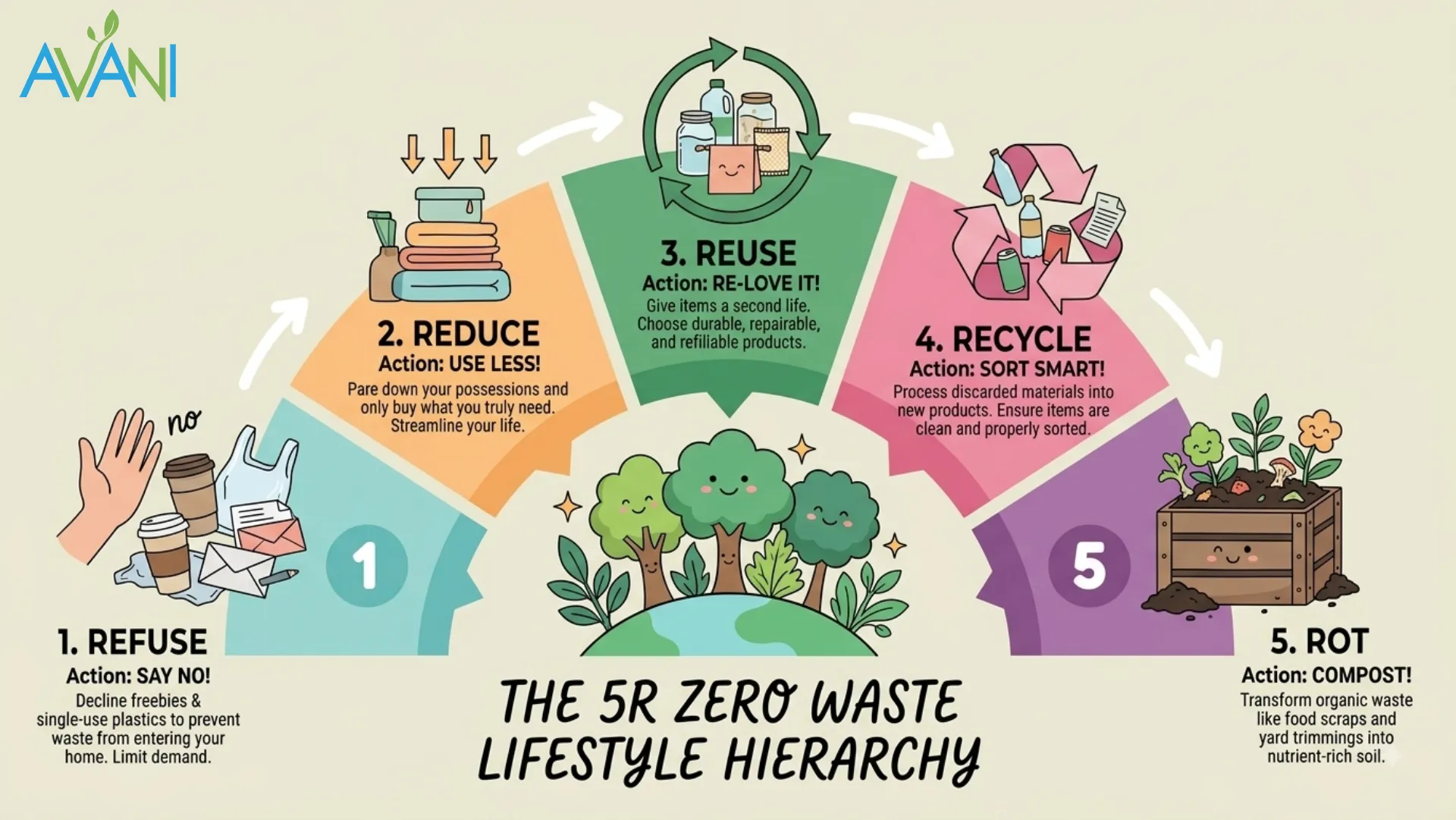
1. Refuse What You Do Not Need
Avani buddies, the first step happens before waste enters your home.
Say no to items you are unlikely to use, such as unnecessary shopping bags, disposable cutlery, promotional giveaways, or extra packaging when an alternative is available.
“Refusing” doesn’t mean you refuse everything. It is about becoming more aware of what you accept and use.
If plastic pollution is one of the reasons you are reducing disposable products, Avani’s article on microplastics and their sources offers additional context on why reducing unnecessary plastic matters.
2. Reduce What You Use
After refusing what you do not need, look at what you regularly buy and use.
Reducing can be as simple as finishing products before replacing them, don’t overeat to prevent food waste, choosing durable items, or buying only the quantity you realistically need.
A zero waste lifestyle does not require replacing everything you own with new “eco-friendly” versions. In many cases, continuing to use what you already have is the more practical and simple choice.
3. Reuse Before Buying New
Reusable items can replace many products designed to be used once.
A refillable water bottle, reusable shopping bag, food container, coffee cup, or cloth napkin can become part of your everyday routine. You can also repair, repurpose, donate, or share items before throwing them.
Start with items you use frequently rather than buying an entire collection of reusable products at once.
4. Recycle What You Cannot Refuse, Reduce, or Reuse
Recycling still has an important role, but it should not be the first solution.
Whenever possible, prioritize preventing waste and reusing materials before relying on recycling. Then separate recyclable items according to the rules and facilities available in your area. Such as plastic bottles with other plastics.
Not every material is accepted everywhere, so check your local recycling area requirements rather than assuming an item can be recycled.
5. Rot Suitable Organic Waste
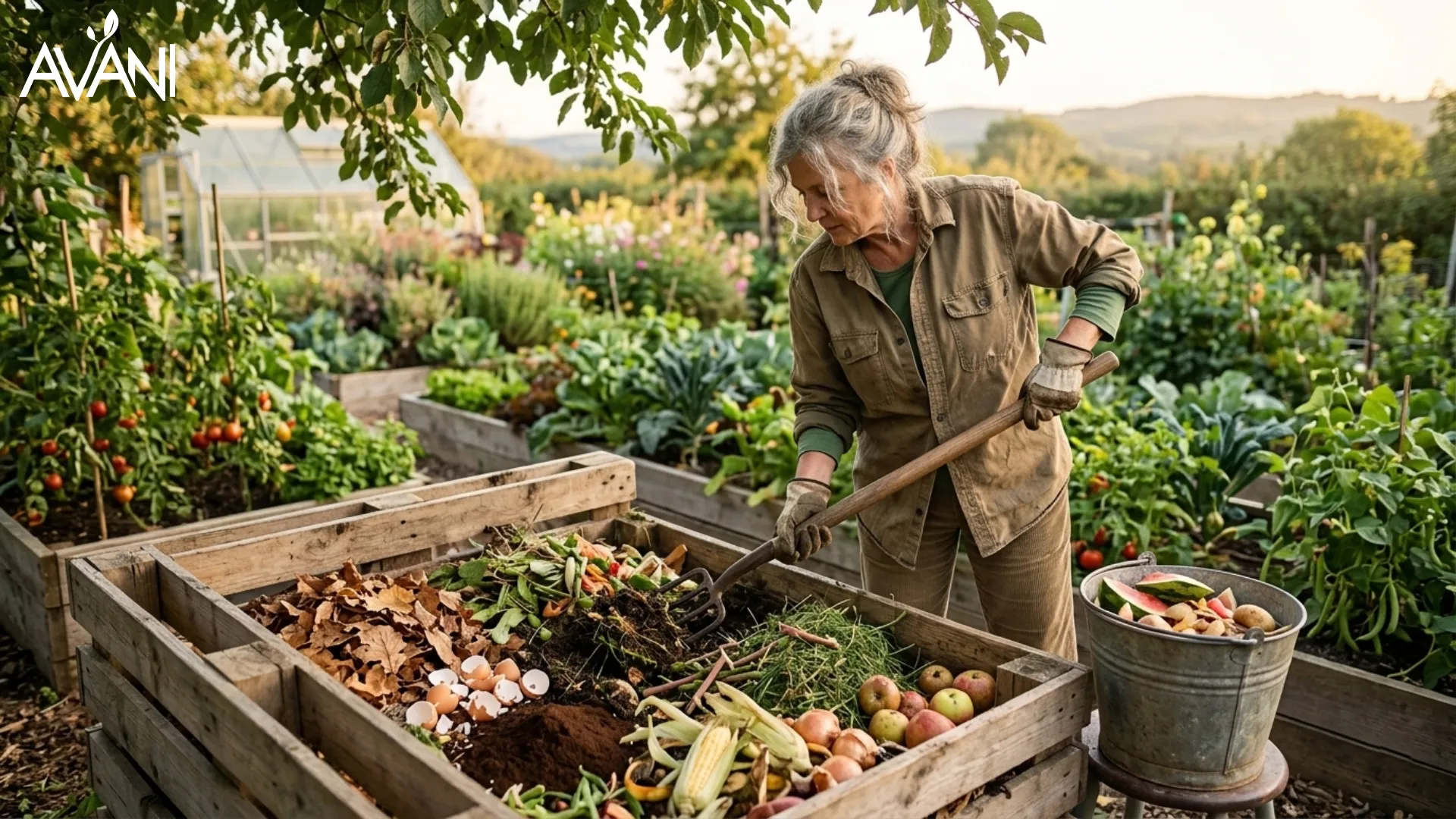
“Rot” refers to composting suitable organic materials instead of sending them directly to general waste.
Depending on your household and local conditions, this may include fruit and vegetable scraps, dry leaves, food waste and other appropriate compostable materials.
For smaller living spaces, you can explore Avani’s guide to the Takakura home composting method, which introduces a compact approach to household composting.
How to Start a Zero Waste Lifestyle Without Feeling Overwhelmed
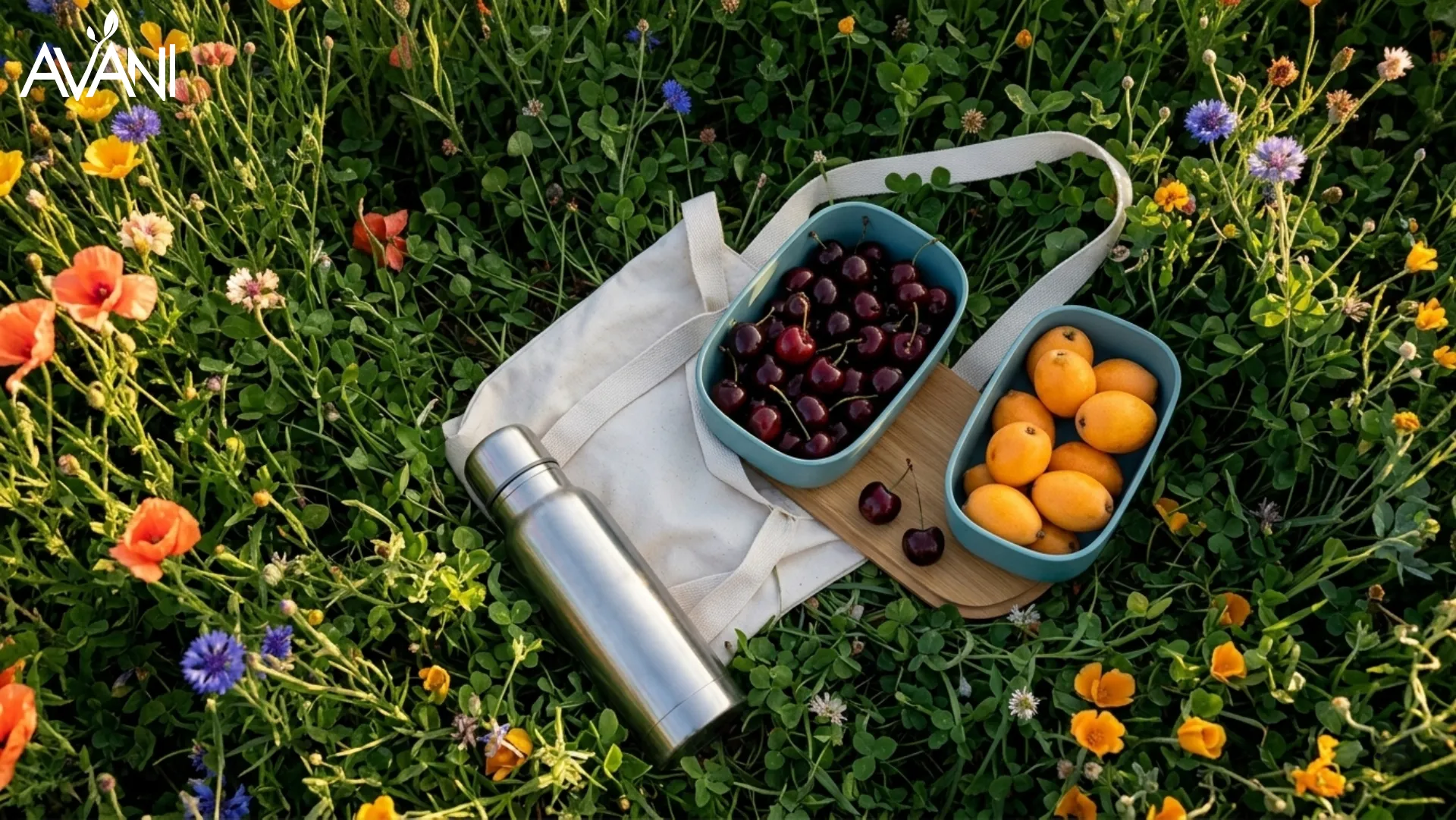
Avani buddies, the easiest way to begin is to look at what you throw away most often.
For a week, pay attention to your household waste. You do not need a complicated tracking system. Simply notice recurring items such as takeaway containers, shopping bags, food packaging, disposable cups, or food scraps.
Then choose one category to improve. You might:
- Carry a reusable bottle or shopping bag
- Plan meals before grocery shopping
- Use containers you already own for food storage
- Decline unnecessary disposable items
- Repair or donate usable belongings
- Compost suitable organic waste
- Learn your local recycling rules
Consistency matters more than changing everything at once.
Common Zero Waste Challenges for Beginners
“I Still Produce Trash”
Avani buddies, that’s normal. Zero waste is better treated as a direction rather than a demand for literal zero trash. Some products, health needs, local infrastructure, budgets, or living situations can make certain types of waste difficult to avoid. Focus on the choices you can realistically control.
“Sustainable Products Can Be Expensive”
You do not need to buy new products simply because they are marketed as sustainable. Use what you already own, borrow when practical, repair items, buy secondhand when appropriate, and replace products only when necessary. Zero waste can begin with buying less rather than buying more mindset.
“My Area Has Limited Recycling or Composting”
Waste-management infrastructure varies by location. If recycling or composting services are limited, focus first on the earlier steps: refuse unnecessary items, reduce consumption, and reuse what you already have. You can also explore community collection programs or small-scale composting methods that are appropriate for your home.
Frequently Asked Questions About Zero Waste
What Is the Easiest Way to Start a Zero Waste Lifestyle?
Start with one source of waste you encounter frequently. Bring a reusable bottle, refuse unnecessary bags, use containers you already own, or plan groceries to reduce food waste. Once the habit feels normal, add another small change.
Do I Need to Eliminate All Trash to Live a Zero Waste Lifestyle?
No. A practical zero waste lifestyle focuses on preventing and reducing waste as much as reasonably possible. The goal is steady improvement, not perfection or guilt over every item you throw away.
What Are the 5Rs of Zero Waste?
The 5Rs are Refuse, Reduce, Reuse, Recycle, and Rot. They encourage you to prevent unnecessary waste first, extend the useful life of products, recycle remaining materials when appropriate, and compost suitable organic waste.
Progress Matters More Than Perfection
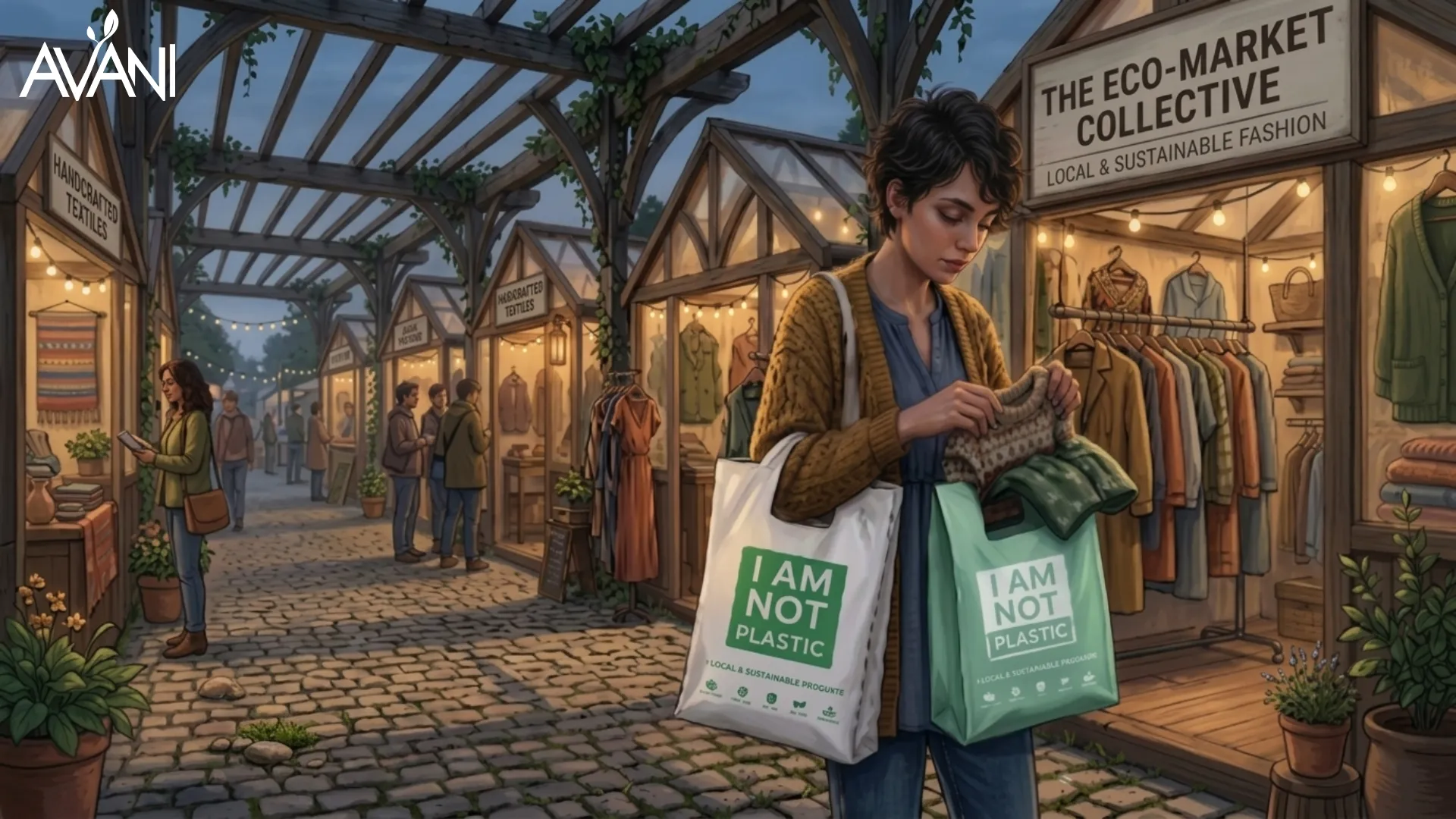
Avani buddies, a zero waste lifestyle is built through everyday decisions. You might start by refusing a disposable item, carrying a reusable container, buying only what you need, or separating organic waste for composting.
None of these actions needs to be dramatic to make your routine less wasteful.
When reusable options are not practical and a bag is still needed, you can explore Avani Eco’s T-Shirt Bag Kantong Singkong, a cassava-based alternative designed to be biodegradable and compostable under appropriate disposal conditions.
The most sustainable routine is one you can realistically maintain. Start small, learn what works for your household, and improve from there.